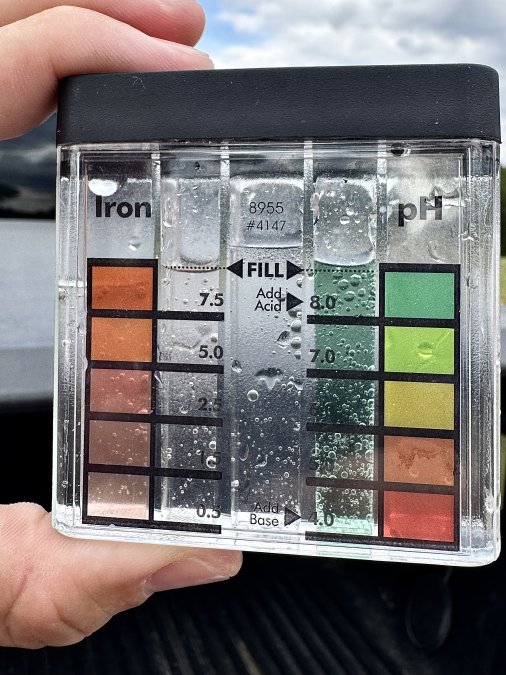
 comparison
Is Professional Water Analysis Worth It? A 2026 Guide
Table of Contents
- Professional Water Analysis vs DIY Test Kits: What's the Difference?
- Common Water Contaminants in Private Wells
- Professional Water Testing Cost: What to Expect
- Is Well Water Testing Covered by Homeowners Insurance?
- The False Sense of Security: Why DIY Kits Can Mislead You
- Post-Treatment Validation: Confirming Your System Works
- Conclusion: Making the Right Call for Your Home
- Frequently Asked Questions
Last Updated: September 30, 2026
Professional Water Analysis vs DIY Test Kits: What's the Difference?
If you've ever squinted at a test strip, wondering whether that faint color shift means "safe" or "concerning," you're not alone. Home test strips are convenient, but they leave too much to interpretation. Professional water analysis is laboratory-grade testing performed by certified technicians using calibrated instruments, and it's the only way to know exactly what's in your water. This guide from This guide breaks down when that precision matters and when it doesn't.
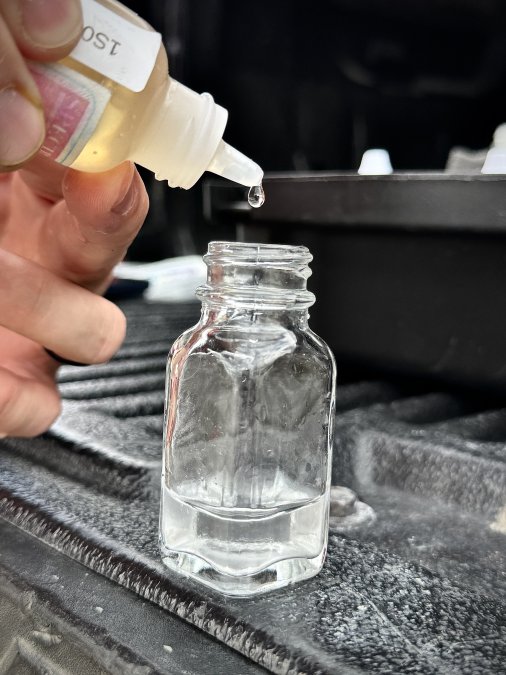
The core difference comes down to detection limits. A DIY strip might tell you hardness is "high." A lab report tells you it's 14 grains per gallon, with iron at 0.8 ppm and manganese at 0.12 ppm. That specificity matters when you're choosing a treatment system.
Accuracy and Detection Limits
Test strips rely on color-matching, which introduces human error and narrow detection ranges. Lab-grade equipment uses analytical chemistry methods like ICP-MS and ion chromatography to detect trace contaminants at parts-per-billion levels.
For context, the EPA's drinking water regulations set enforceable limits on more than 90 contaminants. Many of those limits sit far below what a strip can reliably measure.
Common Water Contaminants in Private Wells
Private wells are unregulated, which means testing is entirely the homeowner's responsibility. Common contaminants include:
- Coliform bacteria and other pathogens from surface intrusion
- Nitrates and nitrites from fertilizer or septic runoff
- Heavy metals like arsenic, lead, and manganese
- Volatile organic compounds from industrial or fuel sources
- Water hardness minerals that damage appliances and plumbing
Professional Water Testing Cost: What to Expect
Professional water testing cost is driven by four variables: the number of analytes in the panel, the analytical method required for each, the lab's certification and turnaround time, and whether a technician collects the sample or you do. Understanding those drivers lets you compare quotes instead of guessing.
What actually drives the price
- Panel size. A potability screen for bacteria, nitrates, and pH is the cheapest tier. Every contaminant you add, arsenic, lead, uranium, radon, VOCs, PFAS, adds a separate analytical method and a separate line item.
- Analytical method. Colorimetric and ion-selective methods are inexpensive. ICP-MS for trace metals, GC-MS for volatile organic compounds, and liquid chromatography for PFAS are far costlier per sample because of instrument time and calibration.
- Certification. A lab certified by your state's drinking water program (many follow the EPA's certification guidance for drinking water laboratories) charges more than an uncertified outfit, but its results hold up if you ever need to document a contamination problem for a lender, insurer, or regulator.
- Turnaround. Standard turnaround is typically several business days. Rush processing and courier sample pickup add cost.
- Collection. A certified technician collecting the sample at your tap removes the biggest source of error, improper sampling, but adds a trip charge.
Panel tiers and what they cover
Test Type | What It Covers | Best For |
|---|---|---|
Basic potability | Coliform bacteria, E. coli, nitrates, nitrites, pH | Annual check on a known-good well |
Expanded panel | Above plus arsenic, lead, iron, manganese, hardness, sulfate, chloride, TDS | New well, new home, first-ever test |
Comprehensive | Above plus VOCs, radiologicals (radon, uranium), PFAS where applicable | Suspected industrial or agricultural contamination |
Post-treatment | Targeted to the specific system (e.g., arsenic breakthrough, softener hardness slip) | Verifying a filter or softener is working |
The cost-benefit math
The honest comparison is not "test cost vs. no cost." It is "test cost vs. the cost of treating the wrong problem." A softener sized for hardness when the real issue is iron will foul prematurely. A carbon filter installed for taste when arsenic is present does nothing for the arsenic. A single expanded panel typically costs less than one service call to diagnose a failed appliance or one round of replacing a filtration cartridge that was never the right fit.
When to skip the full panel
Because pricing varies by lab, panel, and turnaround time, the honest answer is that you should request a quote rather than rely on a ballpark. StreamShield offers a free water analysis, which removes the guesswork from the decision entirely.
Is Well Water Testing Covered by Homeowners Insurance?
Generally, no. Standard homeowners insurance covers sudden, accidental damage, not the ongoing maintenance of your water supply. Well water testing covered by homeowners insurance is rare unless a specific rider or endorsement was added to the policy.
The False Sense of Security: Why DIY Kits Can Mislead You
A passing test strip creates a dangerous assumption: that your water is safe. But strips have detection thresholds that sit above many regulatory limits, meaning a contaminant can be present at a concerning level and still read as "normal."
Why the gap exists: detection limits vs. regulatory limits
Every test has a detection limit, the lowest concentration it can reliably distinguish from zero. Test strips rely on a color change you match by eye, so their practical detection limit is coarse. Lab instruments push that limit down by orders of magnitude.
Request My Free Water Analysis →
The contaminants most likely to slip through
The false-negative risk is not uniform. It concentrates in contaminants that are colorless, odorless, and present at low concentrations:
- Arsenic. Tasteless and invisible. Chronic exposure is associated with serious health effects, and the enforceable limit is low enough that many strips cannot resolve it.
- Lead. Dissolves into water from plumbing and solder. It has no taste or smell, and the action level is set far below what a colorimetric strip can detect.
- Nitrates. A strip may catch high levels but miss moderate ones, and the concern is highest for infants, where the safe threshold is tight.
- Volatile organic compounds (VOCs). Industrial solvents and fuel components. Strips generally do not screen for these at all; they require laboratory methods like GC-MS.
- PFAS. A large and growing class of compounds. Consumer strips for PFAS are limited and often unreliable; certified lab methods are the standard.
- Radon and uranium. Radiological contaminants are effectively invisible to consumer strips.
The mechanism of a false negative
A false negative happens when the true concentration is above the health-based limit but below the strip's detection limit. The strip is not malfunctioning, it is answering a different question than the one you asked. You asked "is this water safe?" The strip answered "is this contaminant above my threshold?" Those are not the same question.
What a certified lab does differently
A certified laboratory uses sample collection protocols designed to prevent cross-contamination, calibrated instruments with documented detection limits, and quality-control procedures that catch instrument drift. The report states the reporting limit for each analyte, so you can see exactly how much confidence to place in a "not detected" result.
That's the difference between a guess and a diagnosis.
The practical takeaway
Use strips for what they are good at: a quick, cheap check for hardness or a sudden change in an already-characterized water supply. Do not use them as the sole basis for a safety decision. If a strip result is the only thing standing between you and a treatment decision, that is exactly the moment to move up to laboratory analysis.
Post-Treatment Validation: Confirming Your System Works
Installing a water filtration system without verifying its output is like painting over a stain without checking the source. Post-treatment validation confirms that your system is actually removing what it's supposed to remove.
Conclusion: Making the Right Call for Your Home
The question isn't whether professional water analysis is worth it. It's whether you can afford to guess. For well owners, the answer is clear. For anyone on municipal water dealing with chlorine taste, sulfur odors, or scale buildup, a professional analysis turns vague complaints into a precise plan.
Frequently Asked Questions
Do home water test kits actually work?
DIY test strips can detect some issues like total dissolved solids or pH, but they often miss trace contaminants such as heavy metals, volatile organic compounds, and pathogens. Their accuracy and precision are limited, and they can produce false negatives. For a complete picture of your water quality, especially if you rely on a private well, laboratory-grade analysis is recommended.
Is well water testing covered by homeowners insurance?
Typically, homeowners insurance does not cover routine well water testing. Policies may cover testing if a specific event, like a well failure or contamination from a covered peril, occurs. Check your policy or ask your agent. Some states or local health departments offer free or low-cost testing programs for private wells, so it's worth exploring those options as well.
What contaminants can professional labs detect that home kits miss?
Professional laboratories can identify a wide range of contaminants including heavy metals (lead, arsenic), volatile organic compounds (VOCs), nitrates and nitrites, coliform bacteria, and trace contaminants at very low levels. Home test kits usually only screen for a few basic parameters and lack the sensitivity to catch these harmful substances, which is why professional water analysis is often worth it.
How often should you have your well water professionally tested?
The EPA recommends testing private well water at least once a year for total coliform bacteria, nitrates, total dissolved solids, and pH levels. If you notice changes in taste, odor, or color, or if there are known contamination risks nearby, test more frequently. Regular professional water analysis helps ensure your water remains safe and can catch problems early.