 how-to
Why Does Hard Water Cause Plumbing Leaks?
Quick Summary
Hard water does not leak on its own, but why does hard water cause plumbing leaks over time? Calcium and magnesium deposits build up as scale inside pipes, narrowing them, stressing joints and fittings, and concentrating corrosion against the metal until a pinhole or crack forms.
- Scale builds in thin layers over months and years, and heat speeds up formation.
- Scale narrows pipes and adds pressure stress on soldered joints and compression fittings.
- Rough scale lets corrosive agents concentrate against metal, which can cause pinhole leaks in copper.
- Galvanized steel is the highest-risk material, since scale and rust combine as the zinc coating wears away.
- Repair any active leak first, then treat the water, because a softener cannot restore a failed pipe.
Table of Contents
- What Hard Water Is and Why It Matters for Your Pipes
- How Calcium and Magnesium Form Scale Inside Pipes
- How Mineral Scale Leads to Pressure Stress and Pinhole Leaks
- How Long Does It Take for Hard Water to Damage Pipes?
- Can Hard Water Cause Clogged Drains and Why That Matters
- How to Remove Hard Water Buildup in Pipes Safely
- Diagnosing a Hard Water Leak and Choosing Your Next Step with a Water Softener System
- Frequently Asked Questions
What Hard Water Is and Why It Matters for Your Pipes
Last Updated: November 7, 2026
I M G 8907
Hard water is water with high levels of dissolved calcium and magnesium (Hardness of Water). Homeowners often notice white crust on faucets and wonder why hard water causes plumbing leaks in their homes. Hard water does not leak on its own. It leads to leaks over time by building mineral deposits inside the plumbing.
Water picks up these minerals as it moves through soil and rock before it reaches your home. Many U.S. homes have some level of hard water.
Here is what to look for in your home:
- White or gray crust on faucet aerators and showerheads
- Soap that leaves a film instead of rinsing clean
- Spotty dishes straight out of the dishwasher
- Water heaters that run noisy or take longer to heat up
These signs do not prove a leak is coming. They do show that minerals are depositing inside your system, which is the first step toward the problem.
How Calcium and Magnesium Form Scale Inside Pipes
Scale is the hard, crusty deposit that forms when calcium and magnesium come out of solution. Heat speeds this up, which is why water heaters and hot water lines often scale first.
Scale does not form all at once. It builds in thin layers over months and years. Each layer narrows the pipe a little more. Rough scale also gives other minerals something to cling to, so the buildup can grow faster over time.
A few factors speed up scale formation:
- Higher temperatures, especially in water heaters
- Water that sits still, such as in unused lines
- Rough pipe surfaces, where deposits stick more easily
- Long periods without maintenance
How Mineral Scale Leads to Pressure Stress and Pinhole Leaks
Scale does not eat through pipe walls the way acid does. Hard water contributes to leaks through several distinct mechanisms, and which one applies depends on your pipe material, your water chemistry, and how the system was installed.
1. Flow restriction and pressure cycling. As scale narrows the inside diameter of a pipe, the same fixture demand pushes water through a smaller opening.
2. Scale as a corrosion anchor. Rough scale gives dissolved oxygen, chloride, and other corrosive agents a place to concentrate against the metal wall.
3. Galvanized steel: scale plus rust. In galvanized steel, mineral scale and internal rust form together. The zinc coating depletes over decades, and once it is gone the steel corrodes from the inside.
4. Joint and fitting stress. Fittings, elbows, and tees create turbulence. Turbulence plus scale plus thermal expansion is where cracks and pinholes concentrate.
5. Water heater and appliance connections. Heat accelerates scale formation, so the hot side of the system scales first.
What this means practically: a leak in a hard-water home is usually the end of a long chain, scale restricted flow, deposits concentrated corrosive chemistry, joints fatigued, and eventually the wall or fitting gave way. Hard water is a contributing condition, not a single cause.
Watch out: do not assume every pinhole is a hard-water problem. High water pressure, flux residue from installation, and electrical grounding on copper lines can all cause pinholes with no scale involved, a plumber should confirm the cause before you spend money on treatment.
Many homeowners first notice the pressure side of this as weaker flow at one fixture while others seem fine. That pattern often points to scale in a specific line rather than a system-wide problem.
Pinhole leaks are small and can be hard to spot. Watch for damp spots on drywall, a musty smell near pipes, or a water bill that creeps up without explanation.
Why Pipe Material and Age Change the Risk
Pipe material matters a lot, and the failure mode differs by material:
- Copper: resists corrosion well under neutral water chemistry, but scale still builds up and stresses soldered joints. Pinhole leaks in copper are often linked to aggressive water (low pH, high chloride) and to deposits that concentrate corrosion.
- Galvanized steel: common in older homes, and the highest-risk material for combined scale-and-rust failure. Expect narrowing and joint failures as the zinc coating depletes over time.
- PEX and CPVC: resist scale adhesion better and do not corrode the way metal does, but fittings and valves still collect deposits, and plastic pipe can fail at crimp or push-fit connections. Scale-related leaks in plastic systems are more often fixture and valve problems than pipe-wall failures.
- Brass and copper alloys: valves, shutoffs, and fittings can suffer dezincification in some water chemistries, which is a corrosion issue that scale can mask.
Older systems usually have more buildup and more wear. If your home is 30 years old or more and you have not had the plumbing inspected, the risk is meaningfully higher, and if the supply lines are galvanized steel, an inspection is worth prioritizing over treatment.
How Long Does It Take for Hard Water to Damage Pipes?
There is no fixed timeline. Damage depends on water hardness, pipe material, water temperature, and how well the system is maintained. Some homes see noticeable buildup within a few years. Others take much longer.
Regular checks help you catch problems early. Ask a plumber or water treatment professional to look at your lines every few years, especially if you already see scale on fixtures.
Can Hard Water Cause Clogged Drains and Why That Matters
Yes. Mineral deposits and soap residue can combine inside drain lines and form a sticky buildup. This slows drainage and can trap debris, which then leads to clogs.
I M G 8912
A slow drain is a warning sign. It is easier and cheaper to address early than after a backup.
How to Remove Hard Water Buildup in Pipes Safely
You can reduce buildup at fixtures with simple cleaning. Soak removable parts like aerators and showerheads in white vinegar for an hour, then rinse. This works for surface scale on fixtures.
Deep scale inside pipes is different. Harsh chemicals or forceful cleaning can damage old pipes and cause leaks. Do not use strong acids or drain cleaners in plumbing lines unless a professional advises it.
Softening the water stops new scale from forming. Water softening does not always clear scale already in the pipes. Scale that has built up may need professional cleaning or repair.
Watch out: Never mix cleaning products. Some combinations release harmful fumes.
Here is a quick reference for the cleaning options the article describes and when each one applies.
Option | Best for | Key difference |
|---|---|---|
White vinegar soak | Aerators and showerheads | Surface scale on removable fixture parts |
Water softening | Preventing new scale | Stops new buildup but may not clear existing scale |
Professional cleaning or repair | Scale already inside pipes | Needed when scale has already built up |
Strong acids or drain cleaners | Not recommended for supply lines | Can damage old pipes and cause leaks |
Diagnosing a Hard Water Leak and Choosing Your Next Step with a Water Softener System
A leak is not always caused by hard water, and the fastest way to waste money is to buy a softener for a problem a softener cannot fix. Work through this in order.
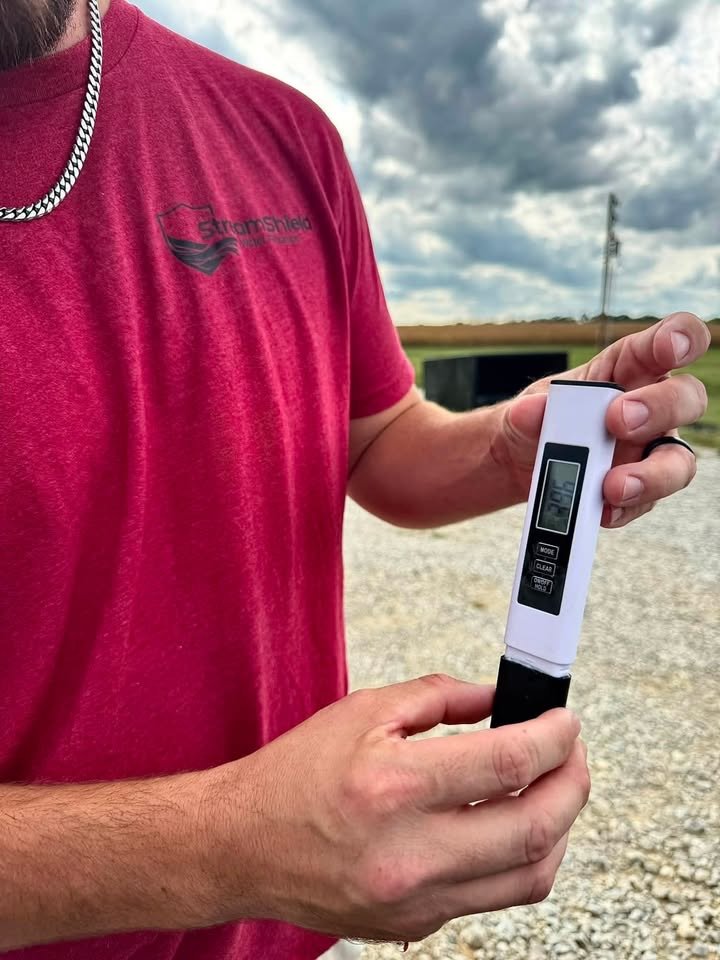
Step 1: Measure hardness. Hardness is reported in grains per gallon (gpg) or milligrams per liter (mg/L) of calcium carbonate; 1 gpg equals about 17.1 mg/L.
Step 2: Measure pressure. Screw a pressure gauge with a hose thread onto a laundry sink faucet or hose bib and read it. Sustained high pressure can contribute to leaks, so a plumber should check it regardless of hardness. High pressure and scale together are far worse than either alone.
Step 3: Match the symptom to the likely cause.
- White crust on aerators and showerheads, soap film, spotty dishes, no leak: scale is present but the system is not failing. Treatment is preventive.
- Weak flow at one fixture, normal elsewhere: scale or debris in that branch line or at the fixture. Clean the aerator first; if flow stays low, the line needs attention.
- Damp spot, musty smell, or rising water bill with no visible drip: likely a pinhole or hidden joint leak. Shut off the supply and call a licensed plumber.
- Leak only in freezing weather: freeze damage, not hardness.
- Leak at a threaded joint or fitting on old galvanized pipe: corrosion and scale failure; the section usually needs replacement, not descaling.
- Leak at the water heater connections or a corroded tank fitting: heat-driven scale and corrosion; the connection or the unit needs service.
- Sudden leak after recent work or a pressure spike: installation or pressure event, not hardness.
Step 4: Decide repair versus treatment. This is the part most guides skip. Descaling or softening addresses future scale; it does not restore a pipe wall that has already thinned or a joint that has already cracked.
Step 5: Choose treatment based on the measurement. If hardness is moderate and there is no evidence of scale-related failure, a softener is optional. If hardness is high or very hard and you see scale on fixtures and the hot-water side, a softener or a scale-control system is reasonable prevention.
Watch out: do not use strong acids or off-the-shelf drain cleaners to descale supply lines. They can attack older metal and turn a slow scale problem into an active leak.
If you find a leak, shut off the water supply and call a licensed plumber. Repairs come first. A water softener system is the next step to protect pipes from future scale.
At Water Treatment Systems, we begin with a free water analysis. We measure hardness and other factors so we can recommend the right system for your home. Our certified technicians install and support each system. Pricing depends on your home, your water, and the system you choose. Contact us for a quote.
Request My Free Water Analysis to find out whether hard water is affecting your plumbing.
Frequently Asked Questions
Is hard water bad for your plumbing?
Hard water is not an immediate danger to pipes, but over years the calcium and magnesium it carries can settle as scale on pipe walls and inside fixtures. That scale narrows the passage, raises water pressure at joints and valves, and can contribute to leaks, especially at connections that already show wear. Most homes with hard water run for years without failures, so the risk depends on water hardness, pipe material, and how long the system has gone without maintenance. A water test is the most reliable way to know how hard your supply is.
How long does it take for hard water to ruin pipes?
There is no fixed timeline. Damage depends on how hard the water is, the pipe material, water temperature, and how often fixtures are used. Scale can build noticeably within a few years in very hard water, while lightly hard supplies may take much longer to cause problems. Hot water lines and water heaters tend to show scale first because mineral solubility drops as water warms. Regular inspection of joints and fixtures helps catch problems before a leak develops.
Do water softeners ruin pipes?
A properly sized and maintained water softener does not damage pipes. Softeners exchange calcium and magnesium ions for sodium or potassium, which reduces scale formation. Problems usually come from incorrect settings, an undersized unit, or neglected salt and resin maintenance. If you notice unexpected leaks after installation, have the system checked and tested, since the cause is often a setting or flow issue rather than the softener itself.
What breaks down calcium deposits in pipes?
Mild acidic descaling solutions, such as those using citric or vinegar-based acids, can dissolve light calcium scale in accessible fixtures like showerheads and faucet aerators. Heavier scale inside main lines usually requires professional descaling or pipe replacement, because strong acids can damage pipe material and joints if used improperly. Always follow product instructions, avoid mixing cleaners, and ventilate the area. Before any treatment on a leaking line, shut off water and assess whether repair is needed first.