 how-to
How to Remove Chlorine From Tap Water
Table of Contents
- Why Chlorine Is Added to Tap Water
- Does Boiling Water Remove Chlorine
- Best Water Filter for Chlorine Removal
- Chloramine Removal From Tap Water
- Chemical Neutralization and Other Methods
- Testing Your Water After Treatment
- Choosing the Right Method for Your Home
- Frequently Asked Questions
Last Updated: September 21, 2026
Why Chlorine Is Added to Tap Water
Municipal water systems add chlorine to kill harmful bacteria and viruses. It's a disinfection method that has protected public health for over a century. The process works by breaking down pathogens and preventing waterborne illness outbreaks.
However, many people seek ways to remove chlorine from tap water because it leaves a taste and smell they find unpleasant. It can also react with organic matter in water to form disinfection byproducts. These compounds concern some households enough to seek removal methods.
At Water Treatment Systems, we help homeowners understand what's actually in their tap water and how to address it. A free water analysis reveals whether chlorine, chloramine, or other contaminants are the real issue in your home.
Does Boiling Water Remove Chlorine
Boiling removes chlorine gas but NOT chloramine, a critical distinction that most households get wrong. Understanding why this happens and when boiling actually works is essential to choosing the right removal method.
How Boiling Removes Chlorine (But Not Chloramine)
Chlorine exists in tap water as a dissolved gas. When you heat water to 212°F (100°C), the boiling action increases molecular movement and causes chlorine gas to escape into the air through a process called off-gassing. The characteristic chlorine smell fades as the gas leaves the water. This works because chlorine has a low boiling point relative to water and readily evaporates when agitated by heat.
Chloramine, by contrast, is a chemical compound formed by bonding chlorine with ammonia. It does not evaporate when heated. Boiling water containing chloramine will NOT remove it, the chloramine remains dissolved in the water even at a rolling boil. This is why many people who boil their water still taste a chlorine-like flavor: they likely have chloramine, not chlorine, and boiling is ineffective.
To confirm which you have, boil a small sample for 15 minutes and smell it. If the smell disappears, you have chlorine. If the smell persists or only slightly fades, you have chloramine.
Time and Energy Requirements
Boiling requires at least 15-20 minutes at a rolling boil to reliably remove chlorine. For a single gallon, this means heating time plus cooling time (water must cool before drinking), totaling 30-45 minutes per batch. For a family of four drinking 8-10 gallons per day, boiling becomes impractical.
Energy cost adds up quickly. Boiling one gallon of water on a standard electric stove costs approximately $0.10-$0.15 per gallon in electricity. Over a year, boiling 10 gallons daily costs $365-$550 in energy alone. This does not include the time investment or the inconvenience of managing hot water in your kitchen.
Why Boiling Concentrates Other Problems
While chlorine escapes, other dissolved minerals and contaminants remain in the water and become more concentrated. If your tap water has high mineral content (hardness), boiling makes it worse by removing water volume while leaving minerals behind. This is why boiled water often tastes flat or mineral-heavy.
If your water contains other contaminants, iron, sulfur, sediment, or bacteria, boiling does not remove them. Boiling only addresses chlorine gas; it is not a comprehensive water treatment solution.
When Boiling Makes Sense
Boiling is practical only for small quantities in specific situations: treating water for a new aquarium (where chlorine and chloramine are toxic to fish), preparing water for a newborn's formula in an emergency, or as a temporary measure while waiting for a filtration system to be installed. For daily drinking water, boiling is inefficient compared to activated carbon filters or whole-home systems.
Boiling vs. Filtration: A Cost Comparison
A pitcher filter with activated carbon costs $20-$40 upfront and $5-$10 per replacement cartridge (good for 40-100 gallons). Over one year, treating 10 gallons daily costs roughly $55-$100 in cartridge replacements plus minimal electricity. A whole-home activated carbon system costs $500-$2,000 installed but removes chlorine from every tap and lasts 6-12 months before cartridge replacement, costing $100-$300 annually in maintenance.
Boiling the same 10 gallons daily costs $365-$550 per year in energy plus your time.
Best Water Filter for Chlorine Removal
Activated carbon filters remove chlorine effectively through a process called adsorption. The carbon's porous surface traps chlorine molecules, pulling them out of the water. Pitcher filters and under-sink filters both use this method.
Activated carbon works best for chlorine gas but less effectively for chloramine. For chloramine removal, you need carbon that has been specially treated or a different filtration method entirely.
Reverse osmosis systems remove chlorine along with many other contaminants. These systems force water through a membrane so fine it blocks chlorine molecules. However, reverse osmosis also removes beneficial minerals and wastes water in the process.
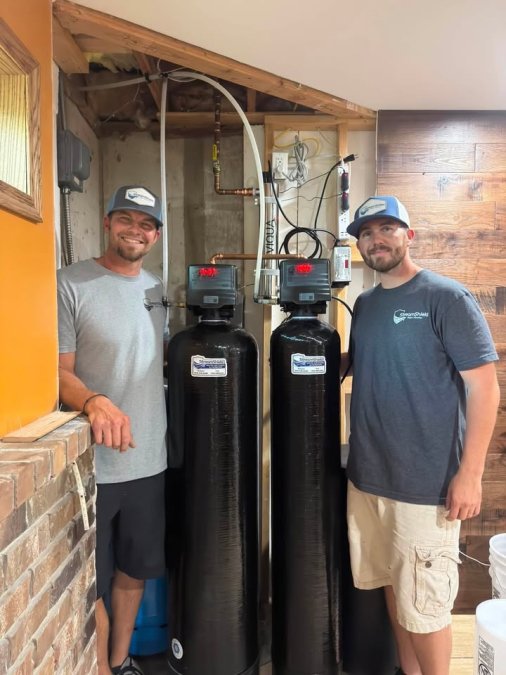
Whole-home filtration systems protect every tap in your house. Point-of-use filters like pitcher filters or under-sink models only treat water at one location. For families concerned about chlorine throughout their home, a whole-home system addresses the issue completely.
Request My Free Water Analysis →
Water Treatment Systems designs custom filtration systems based on your specific water quality. We test your water first to confirm what needs removal. Then we install the right system for your home's needs and water usage patterns.
Chloramine Removal From Tap Water
Chloramine is harder to remove than chlorine because it doesn't evaporate easily. It's a compound made by combining chlorine with ammonia. Many systems use it because it stays in water longer, providing protection through the entire pipe network.
To remove chlorine from tap water that contains chloramine, you need chemical neutralization or specialized carbon. Campden tablets (potassium metabisulfite) break down chloramine through a chemical reaction. One tablet treats about 20 gallons of water.
Sodium thiosulfate is another chemical that neutralizes chloramine instantly. It's commonly used in aquariums and can be added to drinking water. The chemical reaction removes both chlorine and chloramine without leaving harmful residue.
Some activated carbon filters are treated to handle chloramine, but they require longer contact time with the water. Standard carbon filters designed for chlorine alone won't work effectively on chloramine.
Chemical Neutralization and Other Methods
Chemical neutralization uses compounds that react with chlorine or chloramine to break them down. Potassium metabisulfite (Campden tablets) and sodium thiosulfate are the most common options for home use.
Aeration removes chlorine by exposing water to air. Letting water sit in an open container for 24 hours allows chlorine gas to escape. This works for chlorine but not chloramine and requires patience and storage space.
UV light exposure can help break down some chlorine compounds, but it's not a complete removal method. UV works best combined with other filtration approaches.
Ozone treatment oxidizes and removes chlorine, but it requires specialized equipment. Home ozone systems exist but are less common than carbon filtration or chemical neutralization.
Each method has trade-offs. Chemical tablets are cheap but require manual treatment of each batch. Filtration systems cost more upfront but handle water continuously without effort.
Testing Your Water After Treatment
Verifying that your chlorine removal method actually works is essential but often overlooked. Without testing, you won't know if your filter is failing, your boiling time is insufficient, or your chemical tablets are dosed correctly.
Home Test Kits and How to Use Them
Simple chlorine test strips are the fastest way to check results at home. These strips use a color-matching system: dip the strip in treated water for one to three seconds, wait 30 seconds, and compare the color to the chart on the kit. A reading of 0 mg/L means chlorine is undetectable; readings above 0.2 mg/L indicate chlorine is still present. Most kits cost $10-$25 and include 50-100 strips, making them affordable for repeated testing.
However, standard chlorine test strips do NOT reliably detect chloramine. If you suspect your water contains chloramine (it smells like a swimming pool even after boiling), you need a kit specifically labeled for total chlorine or combined chlorine.
When and How Often to Test
Professional Water Testing
Interpreting Results and Next Steps
Choosing the Right Method for Your Home
The best method depends on your water source, the contaminant type, and your usage patterns. Renters might prefer pitcher filters since they're portable. Homeowners typically benefit from whole-home systems that protect all fixtures.
Method | Best For | Effort Level | Cost Range |
|---|---|---|---|
Boiling | Chlorine only, small quantities | High | Low |
Pitcher filters | Chlorine, renting, low budget | Low | Low |
Under-sink filters | Chlorine, kitchen use only | Low | Medium |
Whole-home systems | All water, chlorine + other issues | None | Higher |
Chemical tablets | Chloramine, occasional use | Medium | Low |
Frequently Asked Questions
How long does it take for chlorine to evaporate from tap water?
Chlorine evaporates through off-gassing when water is left uncovered at room temperature. Most free chlorine dissipates within 24 hours, though complete removal may take longer depending on surface area and air circulation. Boiling accelerates this process to just 15-20 minutes. Chloramine, however, requires much longer—often several days—because it bonds more tightly to water molecules and does not evaporate as readily.
What is the difference between chlorine and chloramine removal?
Chlorine evaporates relatively easily through boiling or aeration, while chloramine requires chemical neutralization or activated carbon filtration to remove effectively. Municipal water systems use chloramine as a secondary disinfectant because it persists longer in pipes, but this durability makes it harder to eliminate at home. Standard boiling does not remove chloramine, so homeowners must choose methods like reverse osmosis or chemical additives specifically designed for chloramine.
Do whole-house filtration systems remove chlorine effectively?
Yes, whole-house systems using activated carbon filters or reverse osmosis effectively remove chlorine and chloramine throughout your entire home. These systems protect your appliances, improve water taste and odor, and eliminate chlorine exposure during showers and bathing. The effectiveness depends on the filter type and water flow rate, so professional water testing helps determine which system meets your specific needs.
Is it safe to drink water with chlorine in it?
Chlorine is added to municipal water supplies specifically because it disinfects and prevents waterborne illness. The EPA regulates chlorine levels to ensure safety. However, some people prefer to remove chlorine for taste, odor, or personal preference. Concerns about disinfection byproducts can be addressed through filtration methods like activated carbon or reverse osmosis, which remove both chlorine and these compounds.