 how-to
How to Test Water Hardness Yourself at Home
Quick Summary
You can test water hardness at home with a soap test, using a clear bottle of tap water and a few drops of pure liquid soap. Soft water lathers well, while hard water forms a cloudy film. For a more specific reading, use water hardness test strips and compare the color pads to the chart on the package.
- Fill a clear plastic bottle with 10 ounces of tap water and add 10 drops of liquid soap.
- Shake for about 10 seconds; plenty of lasting foam means soft water, cloudy film means hard.
- Test strips give a more specific reading than a soap test, so read them in good light.
- Most kits report hardness in grains per gallon or ppm, and 1 grain per gallon is about 17.1 ppm.
- A hardness test does not detect bacteria, nitrates, or other contaminants, so use a lab for well water safety.
Table of Contents
- Signs Your Home Has Hard Water
- Test Water Hardness at Home With a Soap Test
- Using Water Hardness Test Strips Step by Step
- How to Read Water Hardness Test Results
- How to Test Well Water Hardness
- What Home Hardness Tests Cannot Tell You
- Booking Your Free Water Analysis in Missouri
- Frequently Asked Questions
Signs Your Home Has Hard Water
Last Updated: November 1, 2026
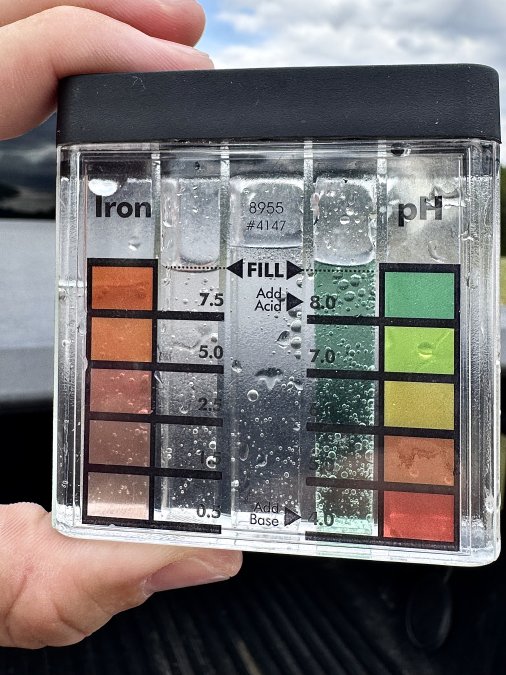
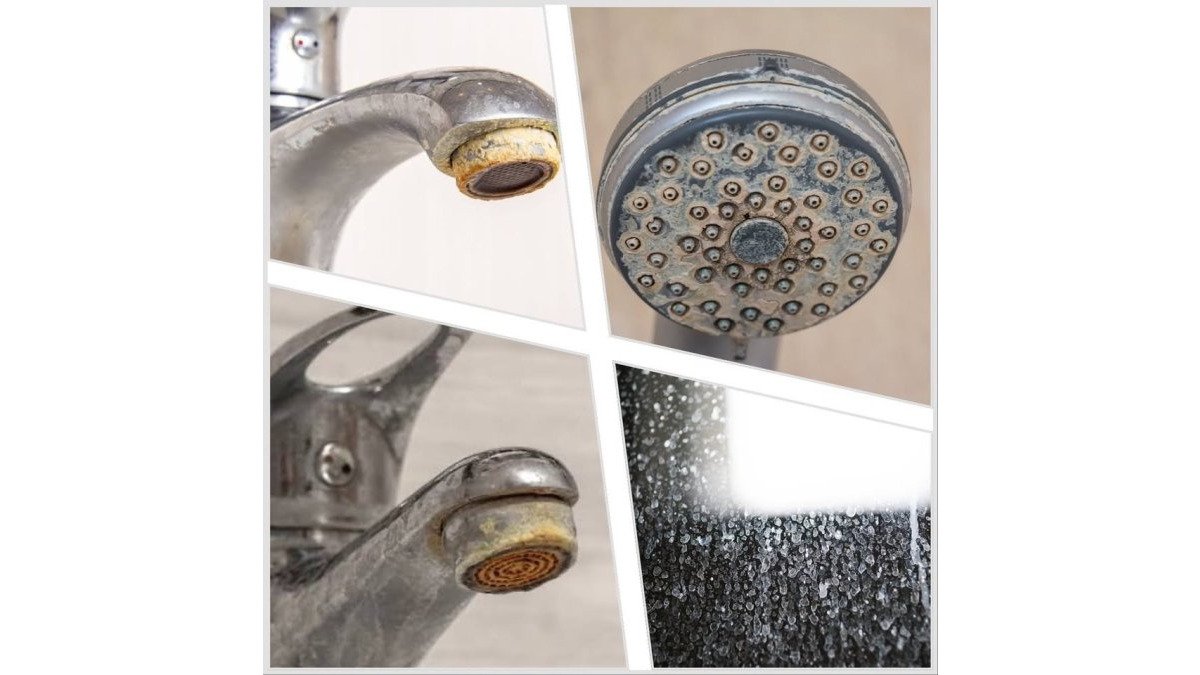
Hard water is one of the most common household water problems in Missouri, and you may already be living with it. Hard water contains high levels of dissolved calcium and magnesium, and those minerals leave behind scale, spots, and soap buildup (Hardness of Water).
Knowing what to look for makes it easier to spot the problem early.
- White, chalky scale on faucets, showerheads, and kettles
- Spots on dishes and glassware after the dishwasher runs
- Soap that won't lather well or leaves a film on skin
- Stiff, dull laundry that feels scratchy after washing
- Dry skin and hair that feel tight after a shower
- Mineral buildup inside water heaters, which can reduce efficiency over time
Scale is the big one. Over time, mineral deposits narrow pipes and can wear down appliances. A few extra minutes of cleaning each week is a sign the water is working against you.
Test Water Hardness at Home With a Soap Test
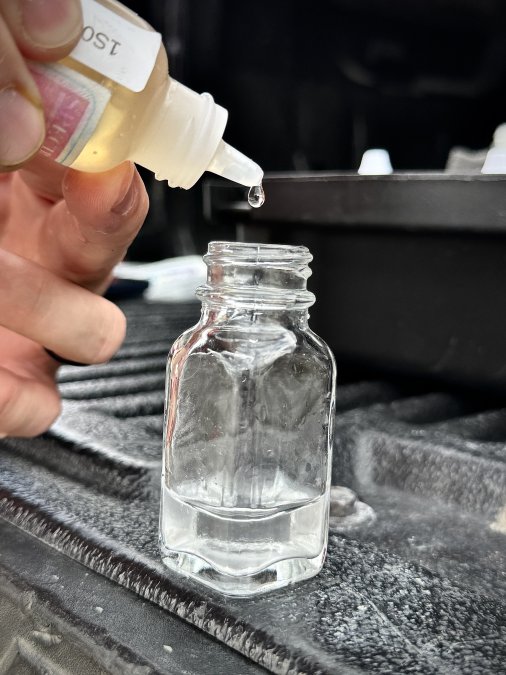
A soap test is the simplest way to check hardness with items you already own. Soft water lathers easily, while hard water forms a cloudy film instead of suds.
What you need:
- A clean, clear plastic bottle with a cap
- Tap water
- Pure liquid soap, such as a castile soap
Steps:
- Fill the bottle with 10 ounces of tap water.
- Add 10 drops of liquid soap.
- Cap the bottle and shake it for about 10 seconds.
- Look at the surface. Plenty of foam that lasts means soft water. Cloudy film or little foam means hard water.
Keep in mind that a soap test is a rough indicator. It tells you hard water is likely, but it does not give a precise number.
Using Water Hardness Test Strips Step by Step
Test strips give a more specific reading than a soap test and are widely available.
- Read the package directions and check the expiration date.
- Run the cold tap for about one minute so you get a fresh sample.
- Dip the strip into the water for the time listed, usually one second.
- Shake off the excess water and wait the listed time, often 15 to 30 seconds.
- Compare the color pads on the strip to the color chart on the package.
Match the color carefully in good light. Strips are easy to misread, so check the result twice before you act on it.
How to Read Water Hardness Test Results
Most home kits report hardness in grains per gallon (GPG) or parts per million (ppm), which is the same as milligrams per liter (mg/L). Once you know your number, learn how to get soft water at home. The two scales describe the same minerals, just at different magnitudes. Here is a common classification used for household water:
Classification | Grains per gallon (GPG) | Parts per million (ppm or mg/L) |
|---|---|---|
Soft | under 1 | under 17 |
Slightly hard | 1 to 3.5 | 17 to 60 |
Moderately hard | 3.5 to 7 | 60 to 120 |
Hard | 7 to 10.5 | 120 to 180 |
Very hard | over 10.5 | over 180 |
Converting Hardness Units: Grains per Gallon and Parts per Million
Use this quick conversion when a kit reports a different unit than the chart you are reading:
- 1 grain per gallon = about 17.1 ppm (mg/L)
- To convert ppm to GPG, divide by 17.1
- To convert GPG to ppm, multiply by 17.1
Worked examples:
- 120 ppm ÷ 17.1 = about 7 GPG (hard)
- 8 GPG × 17.1 = about 137 ppm (hard)
- 250 ppm ÷ 17.1 = about 14.6 GPG (very hard)
Some kits report hardness as mg/L of calcium carbonate (CaCO3). That is the same as ppm for practical purposes, so no extra conversion is needed. If a kit reports only calcium or only magnesium, the number will understate total hardness, total hardness is the sum of both.
What Your Number Means for Your Household
A single threshold does not fit every use. A common pattern is:
Request My Free Water Analysis →
- Under 3.5 GPG: Most households notice little scale; soap lathers well and dishes dry without spotting.
- 3.5 to 7 GPG: Spots on glassware and a light film on shower doors become routine; water heaters may begin to accumulate scale.
- 7 to 10.5 GPG: Visible scale on faucets and showerheads, stiff laundry, and soap that resists lathering are typical; tankless water heaters and coffee makers need more frequent descaling.
- Over 10.5 GPG: Heavy scale, reduced appliance efficiency, and noticeable soap scum are common; many households at this level consider a softener.
These are general patterns, not rules. A household with a tankless water heater, a steam oven, or a whole-house humidifier will feel the effects of 7 GPG sooner than a household without those appliances. If you are testing to decide whether to treat, note which appliances and fixtures in your home are most sensitive to scale and weigh the reading against those.
Testing Before and After a Water Softener
If you have a softener, test both an untreated tap (often an outdoor hose bib or a cold line before the softener) and a treated tap (a kitchen cold line after the softener). A working softener should bring treated water to a much lower reading than untreated water. If the treated reading is close to the untreated reading, the softener may be bypassed, out of salt, or due for service. Test again after any adjustment to confirm the change.
How to Test Well Water Hardness
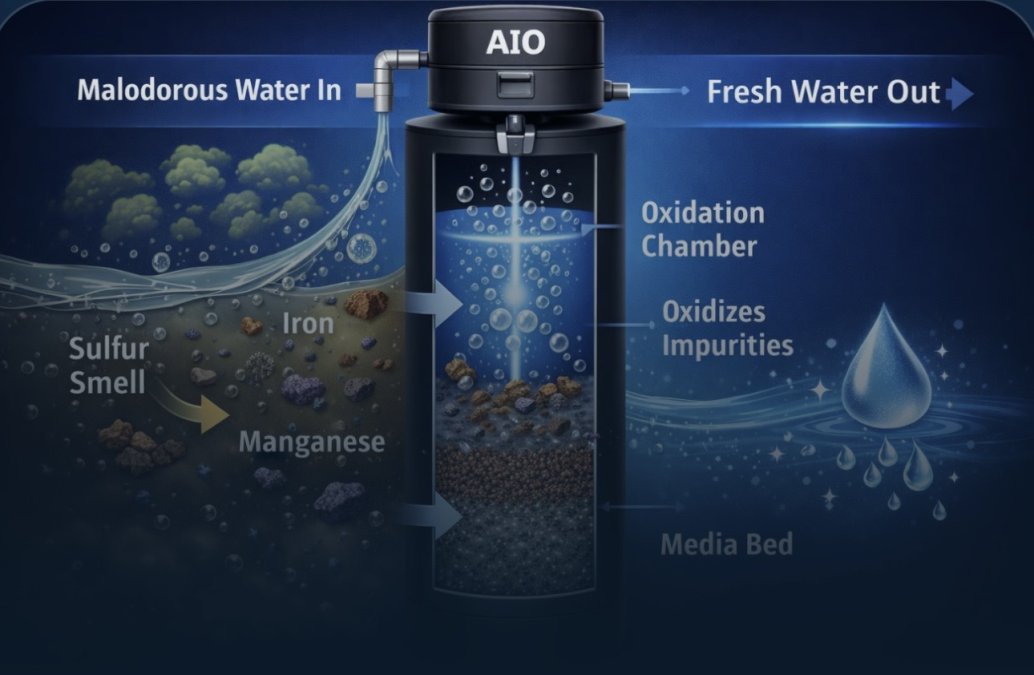
Well water hardness works the same way as city water hardness, but a well needs more careful testing. Well water can carry bacteria, nitrates, iron, and other contaminants that a simple hardness test does not measure.
- Use a kit or sample container from a state-certified laboratory when you can.
- Collect the sample from a cold tap, following the lab's instructions exactly.
- Test after heavy rain or a long dry spell, since both can change water quality.
Well owners should also check for odors and staining. Well owners should consider periodic testing for bacteria, nitrates, total dissolved solids, and pH. Check the U.S. Environmental Protection Agency's guidance for current recommendations.
What Home Hardness Tests Cannot Tell You
A hardness test answers one question: how much dissolved calcium and magnesium is in the sample. It does not tell you whether the water is safe to drink. Hardness testing does not detect bacteria, lead, nitrates, arsenic, PFAS, or other contaminants. A soft reading is not a safety clearance, and a hard reading is not a health warning, the two issues are separate.
Accuracy, Limitations, and Repeatability
Home strips and soap tests are screening tools, not lab instruments. A few common patterns reduce accuracy:
- Expired or poorly stored strips. Strips absorb moisture and degrade. Keep them sealed, dry, and at room temperature, and check the expiration date before use.
- Contamination. Wet fingers, a dirty cup, or a strip that touches a counter can skew the color pads. Use a clean container and handle the strip by the end away from the pads.
- Incorrect timing. Dipping too long or reading too late changes the color. Follow the package timing exactly, often one second in the water and 15 to 30 seconds before reading.
- Poor lighting. Match the pad to the chart in daylight or neutral white light, not under a warm bulb. Yellow-tinted light makes hard-water pads look softer than they are.
- Inconsistent sampling. Hot water, a softened line, or a first-draw sample can all read differently from a fresh cold sample.
Repeat the test when: the reading falls between two color bands, the result conflicts with the symptoms you see in the home, or you are about to spend money on treatment based on the number. Two consistent readings are more trustworthy than one.
When a DIY Test Is Enough, and When to Use a Lab
A home strip or soap test is usually sufficient when:
- You only need a rough classification to decide whether to look into a softener.
- You are checking whether a softener is working.
- You are monitoring a known, stable water source over time.
A certified laboratory test is the better choice when:
- You rely on a private well, especially a new well or one you have not tested recently.
- You suspect a contaminant problem, odors, staining, illness, or a neighbor's known issue.
- You are buying a home and need documented results.
- You need a precise number for sizing treatment equipment.
For well owners, check current guidance from the U.S. Environmental Protection Agency and the Centers for Disease Control and Prevention on testing frequency and laboratory use. A hardness strip does not substitute for a full water analysis.
Booking Your Free Water Analysis in Missouri
If you would rather skip the guesswork, Water Treatment Systems offers a free water analysis for your home. The analysis covers hardness, iron, sulfur, and chlorine issues, and we explain what the results mean for your plumbing and appliances.
Before you book, you can review what happens during a free water analysis so you know what to expect.
To request your free analysis, contact our team to arrange a visit. If you're unsure how to start, follow our step-by-step guide to booking a free water analysis.
Frequently Asked Questions
How do you test water hardness at home?
The simplest home method is the soap test: fill a clean, clear bottle with 10 ounces of tap water, add liquid soap one drop at a time, and shake after each drop. Soft water forms a lather quickly, while hard water stays cloudy and takes more drops before a lasting lather forms. Hardness test strips are another option; dip the strip, wait the time printed on the package, and compare the color to the chart. Home methods estimate hardness, so they are useful for a quick check but do not replace a full laboratory analysis.
How accurate are home water hardness tests?
Home tests are useful for a general reading of hardness, but accuracy varies. Soap tests depend on how carefully you measure drops and how much light and shaking affect what you see, so results can differ between attempts. Test strips give a color-match reading that can be hard to judge in dim light. Neither method identifies the exact mineral content or other contaminants. For a precise number, or for well water where you need broader testing, a state-certified laboratory provides results you can rely on.
What do water hardness test results mean?
Hardness is usually reported in grains per gallon (gpg) or milligrams per liter (mg/L), which is equivalent to parts per million (ppm). Under 1 gpg is considered soft, 1 to 3.5 gpg slightly hard, 3.5 to 7 gpg moderately hard, 7 to 10.5 gpg hard, and above 10.5 gpg very hard. Higher numbers mean more calcium and magnesium, which cause scale on fixtures and appliances and reduce soap lather. A reading in the hard or very hard range is a good signal to consider softening treatment.
When should you get a professional water test?
Get a professional test if your home test shows hard water and you want an exact figure before buying equipment, if you use a private well, or if you notice sulfur odors, iron staining, or unusual taste. Well water in particular should be tested for bacteria, nitrates, and other parameters that a hardness strip cannot measure. Many providers, including Water Treatment Systems, offer a free water analysis, and you can request a quote for current pricing for your home.