 how-to
How to Fix Dry Skin from Hard Water at Home
Quick Summary
Dry skin from hard water is usually caused by calcium and magnesium residue that leaves a film on your skin and weakens its natural barrier. Use lukewarm water and a gentle cleanser, then apply moisturizer while your skin is still damp, within 3 minutes of showering.
- Hard water carries high levels of calcium and magnesium that do not rinse away easily.
- Hard water leaves significantly more detergent residue on skin than soft water does.
- Apply moisturizer within 3 minutes of cleansing, while skin is still slightly damp.
- Limit showers and baths to 5 to 10 minutes and keep the water lukewarm.
- Look for NSF/ANSI 177 certification on shower filters, since most are not full water softeners.
Table of Contents
- Why Hard Water Leaves Your Skin Dry
- How to Tell Hard Water Is the Cause of Your Dry Skin
- How to Wash Your Face with Hard Water Without Stripping Your Skin
- Step-by-Step: Your Post-Shower Moisturizing Routine
- Using a Hard Water Shower Filter (Including Renter-Friendly Options)
- Does a Water Softener Help Dry Skin? What to Expect
- Booking Your Free Water Analysis to Find the Right Fix
- Frequently Asked Questions
How to Fix Dry Skin from Hard Water at Home
Last Updated: October 28, 2026
Why Hard Water Leaves Your Skin Dry
If your skin feels tight and flaky after every shower, your water may be the reason. Hard water is water that carries high levels of calcium and magnesium. These minerals do not rinse away easily, and they can leave a film on your skin that keeps moisture out.
Hard domestic water is identified as a risk factor for the development of eczema in children, according to PMC study on domestic hard water and eczema. That is a serious finding, and it shows why the problem deserves attention.
The steps below explain what causes the problem and what you can change right away.
What Mineral Residue Does to the Skin Barrier
Your skin has a natural barrier made of oils and proteins. This barrier keeps water in and irritants out. Hard water leaves a sticky mineral film behind when it dries, and this film can disrupt that barrier.
Washing with hard water leaves significantly more detergent residue on the skin compared to soft water, according to Crystal Quest analysis of mineral content and soap rinsing. Soap that does not rinse fully keeps stripping oil from your skin long after you step out of the shower.
Hard water can also worsen atopic eczema, according to Wiley Clinical & Experimental Allergy research on water hardness and skin barrier. Once the barrier weakens, moisture escapes faster, and the skin feels dry and itchy.
How to Tell Hard Water Is the Cause of Your Dry Skin
Dry skin has many causes, including cold weather, long hot showers, and certain medications. Hard water is one possible cause among several. Look for patterns before you blame your water.
Check for these signs:
- Your skin feels tight or squeaky after showering, even with moisturizer
- Your hair looks dull and feels coated, even after conditioning
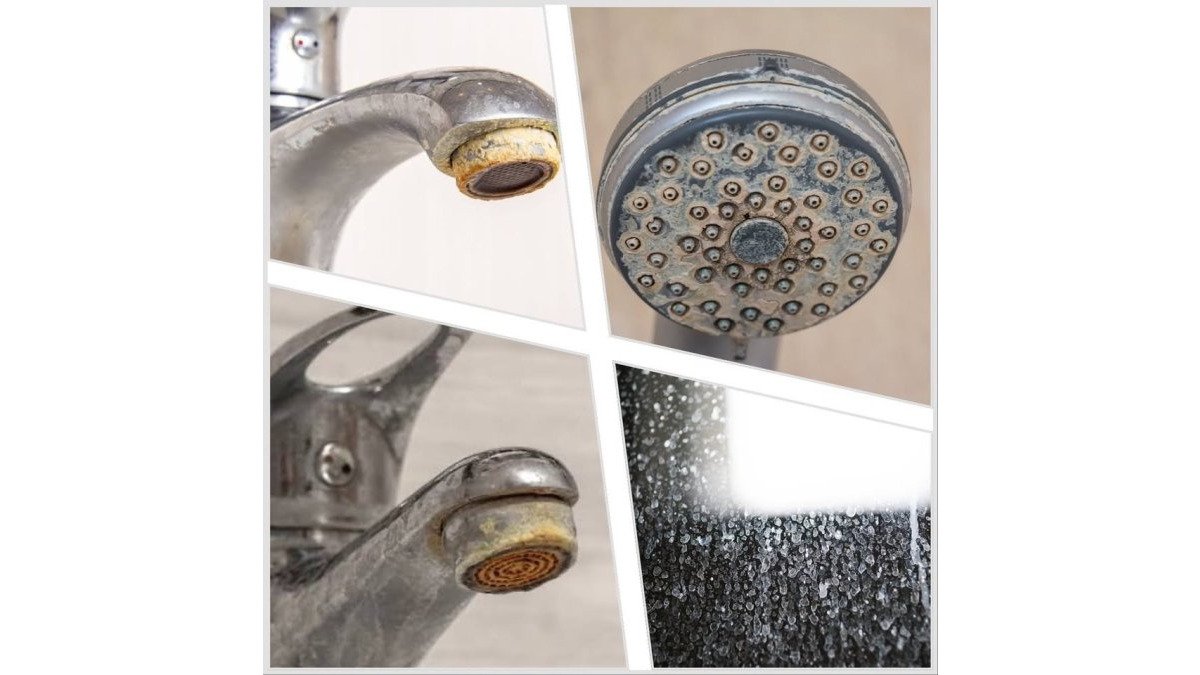
- You see white, chalky spots on faucets, shower doors, or dishes
- Your laundry looks dingy and feels stiff
- Your water heater or kettle has scale buildup
If several of these match your home, hard water is one possible cause. A water test can help assess your water.
How to Wash Your Face with Hard Water Without Stripping Your Skin
Washing your face is where most of the damage starts. Hard water and harsh cleansers together can strip oil faster than either one alone.
Follow these steps:
- Rinse your face with lukewarm water, not hot.
- Choose a gentle, non-stripping cleanser labeled for dry or sensitive skin.
- Massage the cleanser for 30 seconds, then rinse well.
- Pat your face dry with a soft towel. Do not rub.
- Apply moisturizer while your skin is still slightly damp.
Consider using a mild toner after cleansing. Toners with citric or phytic acid can help reset skin pH after exposure to alkaline hard water. Use a small amount and avoid products with alcohol if your skin is already dry.
Watch out: Scrubbing with a rough cloth can break the skin barrier further. Use your fingertips instead.
Step-by-Step: Your Post-Shower Moisturizing Routine
The window right after your shower matters most. Your skin absorbs moisture best while it is still damp.
Request My Free Water Analysis →
Applying moisturizer to damp skin within 3 minutes of cleansing is recommended to lock in hydration, according to Loved01 guidance on hard water skincare. Use this routine:
- Pat dry, do not rub. Leave your skin slightly damp.
- Apply moisturizer within 3 minutes. Work it in while the skin is still soft.
- Choose ingredients that hold water. Look for glycerin, hyaluronic acid, ceramides, or petrolatum.
- Repeat at night. A thicker cream works well before bed.
Limit showers and baths to 5 to 10 minutes, as recommended by the American Academy of Dermatology dry skin guidance. Shorter, cooler showers help keep natural oils in place.
Here is what a typical daily routine might look like:
- Morning: gentle rinse, light moisturizer, sunscreen
- Evening: gentle cleanser, toner if needed, thicker moisturizer
- Weekly: a clarifying treatment, if your water leaves heavy residue
The steps below summarise the post-shower routine and its timing.
Step | What to do | Time or frequency |
|---|---|---|
Pat dry | Pat skin slightly damp, do not rub | Right after shower |
Apply moisturizer | Work in while skin is still soft | Within 3 minutes |
Choose ingredients | Glycerin, hyaluronic acid, ceramides, petrolatum | Each application |
Repeat at night | Use a thicker cream before bed | Nightly |
Limit shower time | Keep showers and baths short | 5 to 10 minutes |
Using a Hard Water Shower Filter (Including Renter-Friendly Options)
A shower filter is the lowest-friction way to cut mineral and chlorine exposure, and it is the single best option for renters because it attaches to the existing shower arm with no plumbing changes and no landlord permission. The trade-off is honest: most shower filters are not water softeners. They reduce chlorine, sediment, and some metals well, but they cannot remove the calcium and magnesium that define hard water at the same rate a whole-home softener can. Set expectations accordingly, a filter helps, but it is a partial fix.
What to look for before you buy
- Filtration media. Catalytic carbon and KDF (a copper-zinc alloy) media are the common choices for chlorine and metal reduction. Some cartridges add a scale-inhibiting media that changes how minerals behave rather than removing them.
- Certification. Look for NSF/ANSI Standard 177 for shower filtration claims, or NSF/ANSI 42 for aesthetic chlorine reduction. A filter that lists no standard is a guess.
- Cartridge life. Most cartridges are rated for roughly 10,000 to 15,000 gallons, or about three to six months of daily showers for a typical household. Replace on schedule, a spent cartridge can harbor bacteria and stop reducing chlorine.
- Flow rate. Check the rated flow (commonly 2.0 to 2.5 gallons per minute). A filter that chokes flow encourages longer, hotter showers, which is the opposite of what dry skin needs.
- Fit. Confirm the thread size (most shower arms are 1/2 inch NPT) and whether the head hangs low enough to clear your existing shower head.
Renter-friendly options beyond the shower head
- A filtered hand-held shower head replaces the whole head rather than adding an inline cartridge, which is useful when the existing head is old or low-flow.
- A faucet-mounted filter for the bathroom sink helps with face-washing, which is where a lot of barrier damage starts.
- A portable countertop or under-sink filter is not a shower fix, but it gives you soft-ish water for rinsing your face and filling a basin.
Maintenance that keeps a filter working
For a whole-home approach, read more about whole house water filtration benefits to compare your options.
Does a Water Softener Help Dry Skin? What to Expect
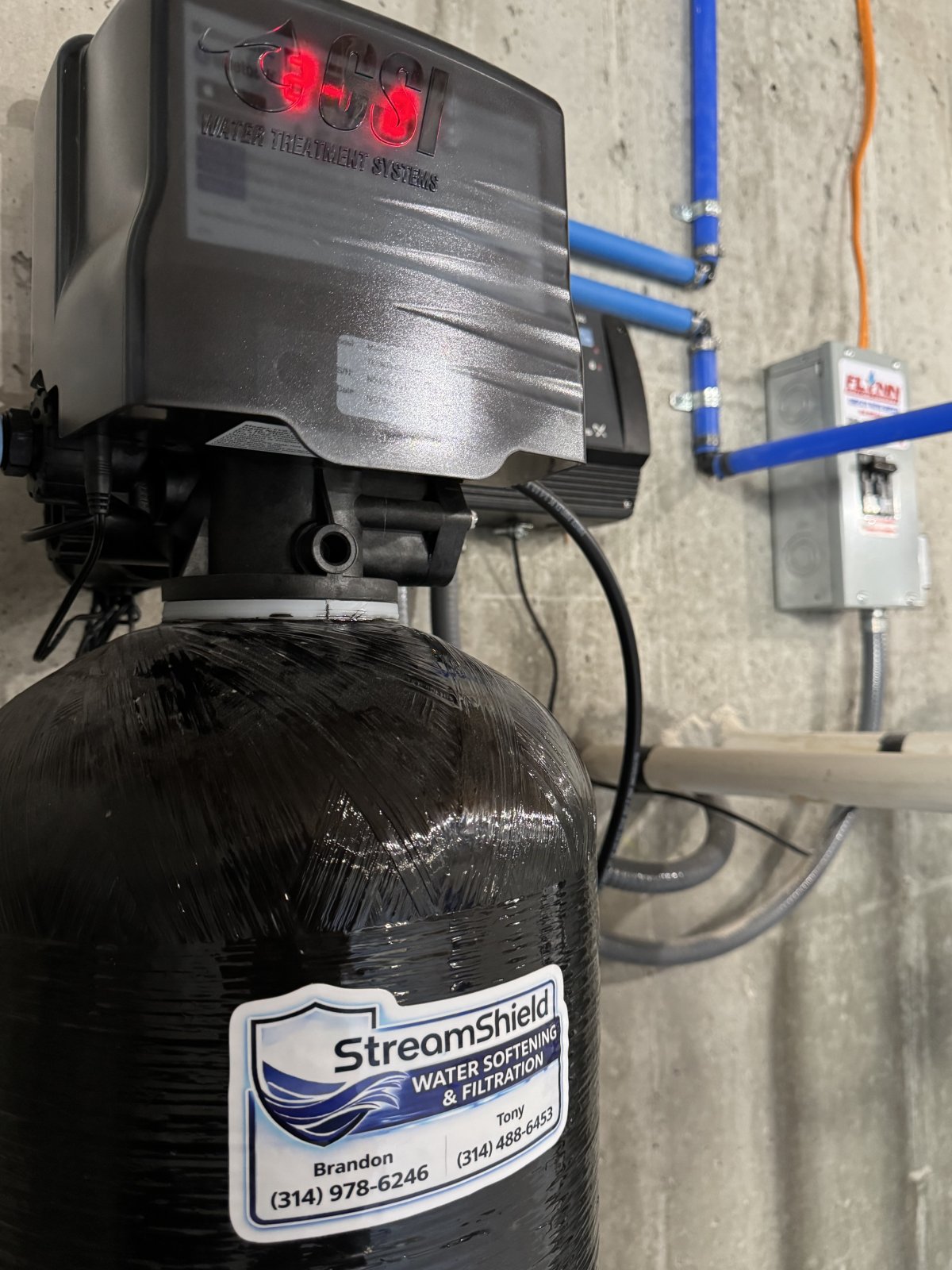
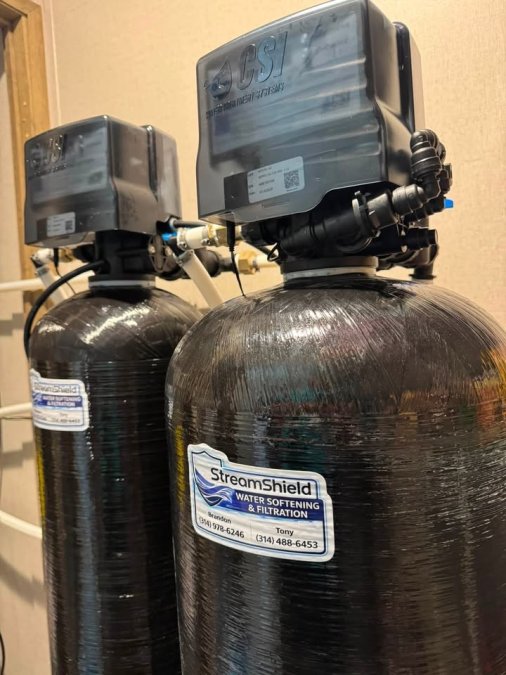
A water softener removes calcium and magnesium through ion exchange: hard water passes through a resin bed charged with sodium (or potassium) ions, and the resin swaps those ions for the hardness minerals. The water that reaches your shower is genuinely softer, so soap rinses more completely and leaves less mineral film on your skin. That is the mechanism behind the softer-skin reports, it is not a cosmetic effect.
What actually changes
A softener will not fix dryness caused by weather, aging, or a skin condition, and it will not replace a moisturizing routine. It removes one cause; it does not repair a barrier on its own.
The trade-offs nobody mentions
Keep moisturizing, use gentle cleansers, and keep showers short. Contact Water Treatment Systems for a quote based on your home.
Booking Your Free Water Analysis to Find the Right Fix
Water Treatment Systems offers a free water analysis for Missouri homes.
If you want to know what happens during the process, read What Happens During Free Water Analysis before you schedule.
Ready to learn more about your water? Book Free Home Water Quality Analysis. Request My Free Water Analysis today.
Frequently Asked Questions
Can hard water cause dry skin?
Yes, hard water can contribute to dry skin. If dryness persists after changing your routine, see a dermatologist.
How do I wash my face if I have hard water?
Use a gentle cleanser, lather it in your hands with lukewarm water, and rinse thoroughly. Pat your skin dry rather than rubbing. Follow with a toner or moisturizer while your skin is still slightly damp. Limiting hot, long showers may also be part of your routine.
Will a water softener help with dry skin?
Water Treatment Systems offers a free water analysis before you decide; contact us for current pricing and a quote.
What moisturizer should I use after showering in hard water?
Apply a moisturizer while skin is still damp. Reapply during the day as needed.