 how-to
Does Water Softening Prevent Appliance Scale
Last Updated: October 23, 2026
Quick Summary
Yes, does water softening prevent appliance scale by removing the calcium and magnesium minerals that cause it. A water softener using ion exchange traps these minerals before they reach your appliances, stopping new scale from forming on heating elements, pipes, and fixtures. However, softening prevents future scale but does not dissolve deposits already bonded to surfaces.
- Water softening removes calcium and magnesium through ion exchange, preventing new scale formation on appliances and heating elements
- Softening does not remove existing scale already bonded to water heaters or pipes; existing deposits require vinegar or professional descaling
- A softener must be properly sized, maintained with regular regeneration, and installed on your main water line to protect all appliances
- Salt-free conditioners are not true softeners and do not reliably prevent scale the way ion-exchange systems do
- Test your water hardness; softening is recommended for water above 61 PPM and strongly recommended above 180 PPM
Table of Contents
- How Hard Water Causes Mineral Scale Buildup
- How Water Softening Reduces Scale Formation
- Water Hardness Test for Home: Verify Your Water Condition
- How to Prevent Limescale Buildup in Pipes and Fixtures
- Water Softener and Water Heater Scale: Protection and Performance
- How to Remove Hard Water Scale from Appliances
- Limitations and What Water Softening Cannot Fix
- Frequently Asked Questions
How Hard Water Causes Mineral Scale Buildup
Hard water contains dissolved calcium and magnesium.
Scale clogs pipes and fixtures, reduces flow, and insulates heating elements so they work harder.
These minerals don't dissolve easily and stay behind when water evaporates or heats, so every hot-water cycle adds more deposits.
Common places where scale forms:
- Faucet aerators and showerheads
- Water heater tanks
- Dishwasher spray arms
- Washing machine inlet valves
- Coffee makers and kettles
- Pipes and plumbing fixtures
A scaled water heater uses more energy, a dishwasher with clogged spray arms cleans poorly, and washing machines take longer to fill.
How Water Softening Reduces Scale Formation
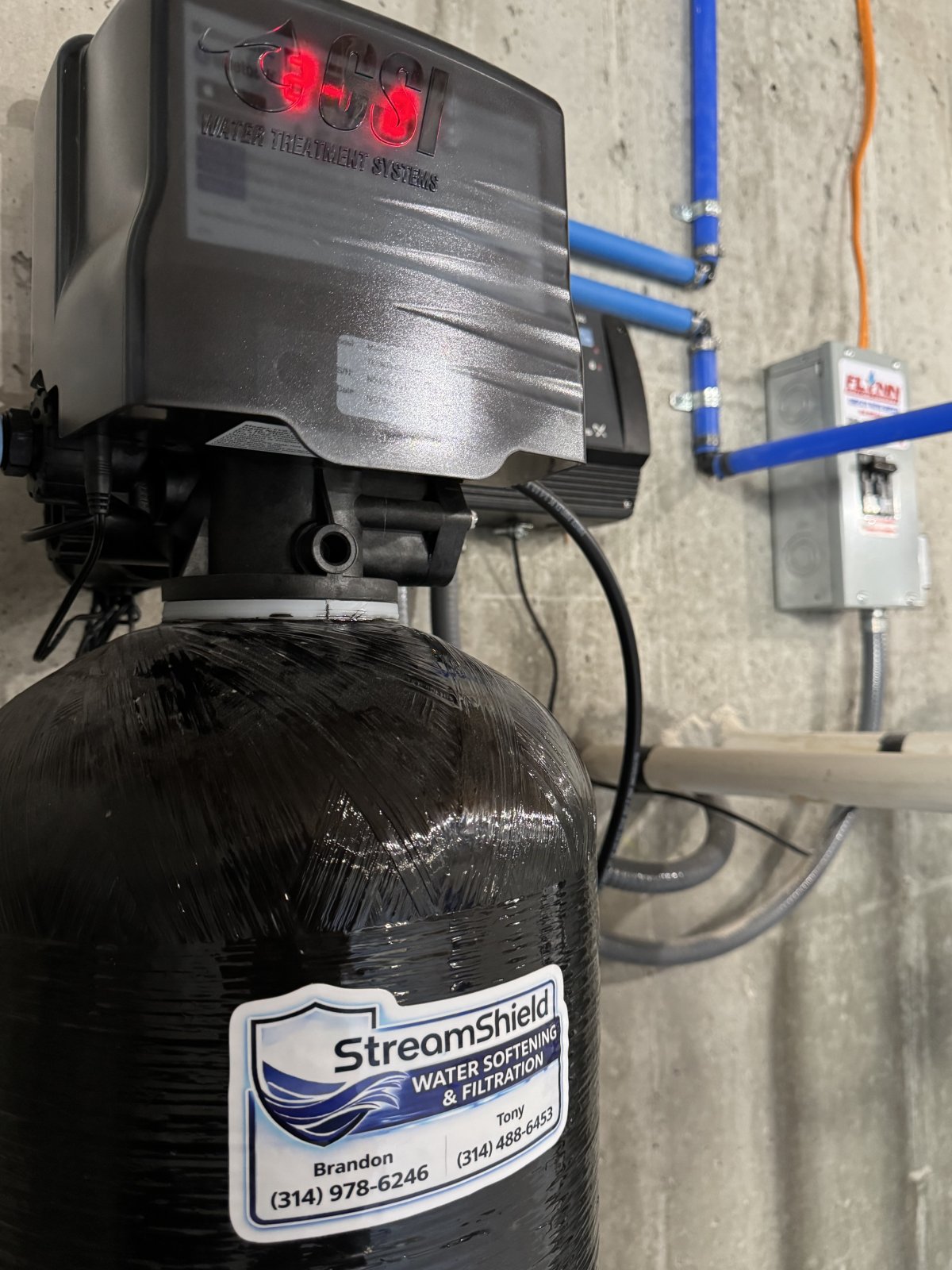
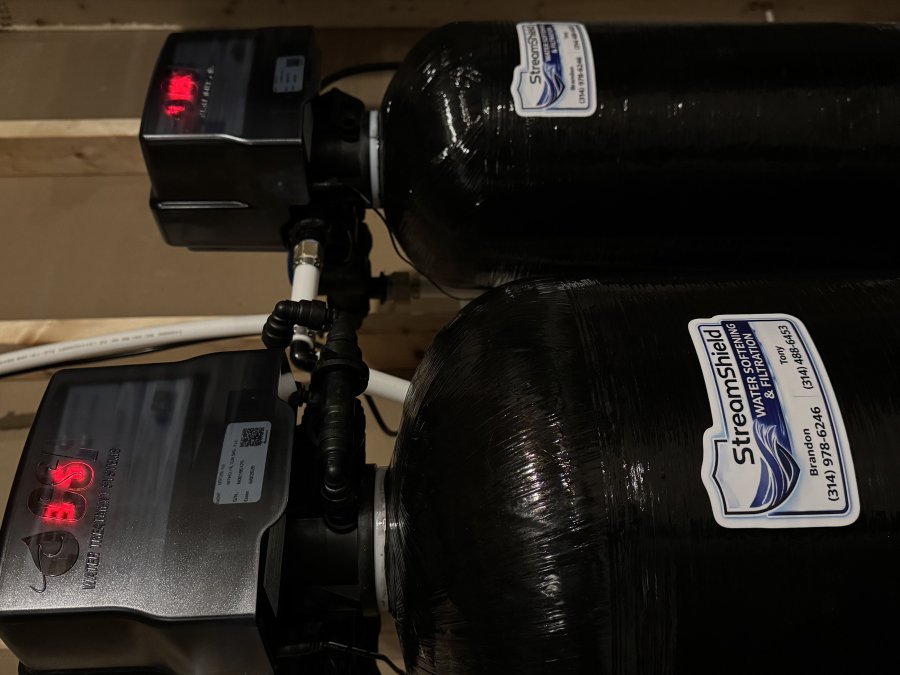
Water softening removes the minerals that cause scale, most commonly via ion exchange. A softener tank's resin beads trap calcium and magnesium and release sodium ions in their place.
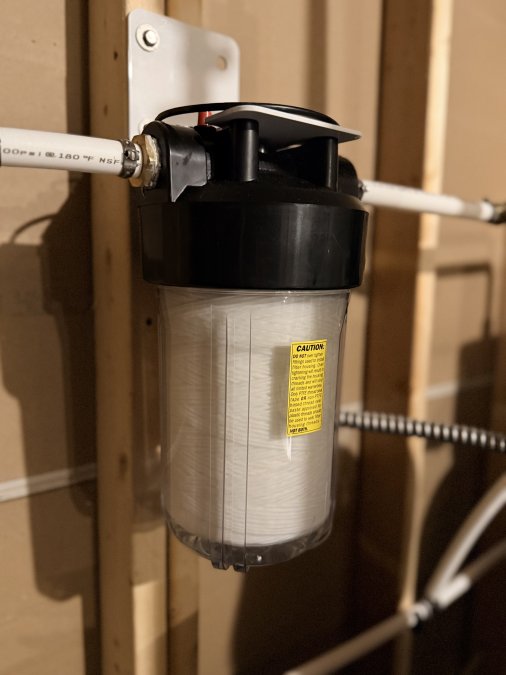
Without those minerals, nothing sticks to surfaces and hardens, so pipes stay clear and appliances run more efficiently.
How ion exchange softening works:
- Hard water enters the softener tank
- Resin beads capture calcium and magnesium ions
- Sodium ions are released into the water
- Softened water exits the tank and flows through your home
This approach has been used for decades. According to the EPA technical sheet on water softeners, the IAPMO/ANSI Z601 standard was developed to evaluate whether softening devices effectively reduce scale formation.
What softened water does:
- Prevents new scale from forming
- Protects appliance heating elements
- Keeps pipes and fixtures clean
- Improves water flow
- Reduces energy use in water heaters
Water Hardness Test for Home: Verify Your Water Condition
You need to know your water hardness before choosing a treatment. Water Treatment Systems offers a free water analysis that identifies your hardness level and other water quality issues.
How to test your water hardness:
A hardware-store test strip changes color when dipped in water, revealing your hardness level in minutes.
What your hardness number means:
- 0-60 PPM: Soft water (no treatment needed)
- 61-120 PPM: Moderately hard (softening helps)
- 121-180 PPM: Hard (softening recommended)
- Above 180 PPM: Very hard (softening strongly recommended)
A professional analysis goes deeper, checking for iron, manganese, sulfur odors, and chlorine taste to identify the best treatment, free from Water Treatment Systems.
How to Prevent Limescale Buildup in Pipes and Fixtures
Prevention starts with treating your water before scale can form.
Steps to prevent limescale buildup:
Install a water softener on your main water line so every tap, appliance, and fixture gets softened water.
Keep your softener maintained, regular regeneration flushes trapped minerals and recharges the resin beads, usually automatically.
Check water pressure regularly; lower flow at your taps may signal buildup despite treatment.
Run water through all fixtures, even rarely used ones, since stagnant water deposits minerals faster.
Water Softener and Water Heater Scale: Protection and Performance
Your water heater is where scale does the most expensive damage, because it holds hard water at temperature for hours.
Two different problems form inside a water heater:
- Element scale, a hard mineral crust bonded to the heating element or heat exchanger. This is the insulating layer that forces the element to run hotter and longer.
- Tank sediment, soft, sand-like calcium carbonate sludge that settles on the tank bottom. In gas heaters it blankets the burner plate; in electric tanks it buries the lower element. Sediment also creates the popping and rumbling sound homeowners hear during recovery.
Both start with the same hardness minerals, and both are what a properly sized ion-exchange softener is designed to prevent.
How scale changes water heater performance:
- Heat transfer drops. Scale conducts heat poorly, so the element or burner runs longer to deliver the same hot water. The U.S. Department of Energy's guidance on water heating is built around the principle that anything insulating the heat-transfer surface raises standby and recovery energy use.
- Recovery time stretches, often the first symptom homeowners notice.
- The element runs hotter than designed. In electric tanks, a heavily scaled element can overheat and fail open, leaving you with no hot water.
- The tank works harder. Repeated thermal stress on a scaled tank bottom accelerates metal fatigue and, eventually, leaks.
- Tankless units lose capacity. Scale narrows the heat exchanger passages, reducing flow and triggering error codes or shutdowns.
What softening actually changes:
With calcium and magnesium removed before the water enters the heater, there is no mineral load to precipitate onto the element or settle as sediment.
Maintenance that pairs with softening:
Request My Free Water Analysis →
- Flush the tank annually. Even with softened water, some sediment can accumulate. Attach a hose to the drain valve, shut off power or gas, and drain until the water runs clear.
- Check the anode rod every two to three years. Softened water is generally easier on the anode, but the rod is still a consumable part.
- Test treated hardness at the heater drain. A reading above roughly 1 grain per gallon (about 17 mg/L) suggests the softener is bypassing, exhausted, or undersized for the household.
- For tankless units, follow the manufacturer's descaling interval. Most manufacturers still call for periodic descaling even with softened water, because the heat exchanger operates at higher temperatures than a tank.
Appliance-specific expectations:
- Electric tank: biggest efficiency and element-life gain, because the element is directly in the water.
- Gas tank: main gain is reduced sediment on the burner plate and longer tank life; efficiency gain is smaller but real.
- Tankless: softening protects the heat exchanger from scale narrowing, but descaling is still required per the manufacturer's schedule.
- Heat-pump water heater: softening protects the immersed element and reduces sediment, and the lower operating temperature means scale forms more slowly.
How to Remove Hard Water Scale from Appliances
Existing scale needs cleaning. Softening prevents new scale, but it doesn't remove deposits already there.
How to remove scale from common appliances:
Dishwashers: Run a cleaning cycle with white vinegar. Place a bowl of vinegar on the top rack.
Washing machines: Pour white vinegar into the drum. Run a hot water cycle with no clothes.
Coffee makers: Fill the tank with equal parts vinegar and water. Run the brew cycle.
Faucets and showerheads: Soak in a bowl of white vinegar for 2-4 hours. Scrub with an old toothbrush. Rinse thoroughly.
Water heaters: Flushing removes some sediment, but heavy scale requires professional descaling.
Vinegar is cheap and effective for light to moderate scale; commercial descalers work faster on heavy buildup.
Scale removal tools and materials:
- White vinegar (5% acidity)
- Commercial descaling products
- Old toothbrush or soft brush
- Cloth or sponge
- Rubber gloves
Removal vs. Prevention: What Water Softening Actually Does
The critical distinction: water softening prevents new scale from forming, but it doesn't remove scale that's already there. Once scale hardens on a heating element or inside a pipe, softening stops it from worsening but doesn't dissolve what's already stuck.
If your home already has scale, you need two steps. First, remove existing deposits with vinegar or descaling products. Second, install softening to prevent it from coming back. Softening will protect the water heater from future damage, but existing deposits need physical removal or professional descaling.
Limitations and What Water Softening Cannot Fix
Most articles answer "does water softening prevent appliance scale" with a flat yes.
1. Untreated water can bypass the softener.
A softener installed on the main line treats the water that flows through it, but several common setups send hard water around it:
- Outdoor hose bibs are often plumbed before the softener to save salt and resin capacity. That is fine for the lawn, but it means any appliance fed from an unsoftened line gets no protection.
- Kitchen cold-water taps are sometimes left hard by design, on the theory that drinking water should not carry sodium. If your refrigerator water line or coffee maker draws from that tap, it is not protected.
- Bypass valves left partly open during service, or a softener in bypass after a repair, silently deliver hard water to every appliance.
- Undersized systems cannot keep up with demand. A softener sized for a two-person home will pass hard water during back-to-back showers or laundry days, and that hard water reaches the water heater.
2. Results depend on how hard your water actually is.
3. Salt-free conditioners are not softeners.
Conventional ion-exchange softening removes calcium and magnesium.
4. Softening prevents new scale; it does not remove old scale.
5. Softening does not address unrelated water problems.
These are real limits, but they are separate from scale:
- Iron and manganese cause orange or brown staining and can foul softener resin over time. They need an iron filter or oxidizing filter ahead of the softener.
- Hydrogen sulfide (rotten-egg odor) requires aeration or carbon filtration.
- Chlorine taste and odor require carbon filtration.
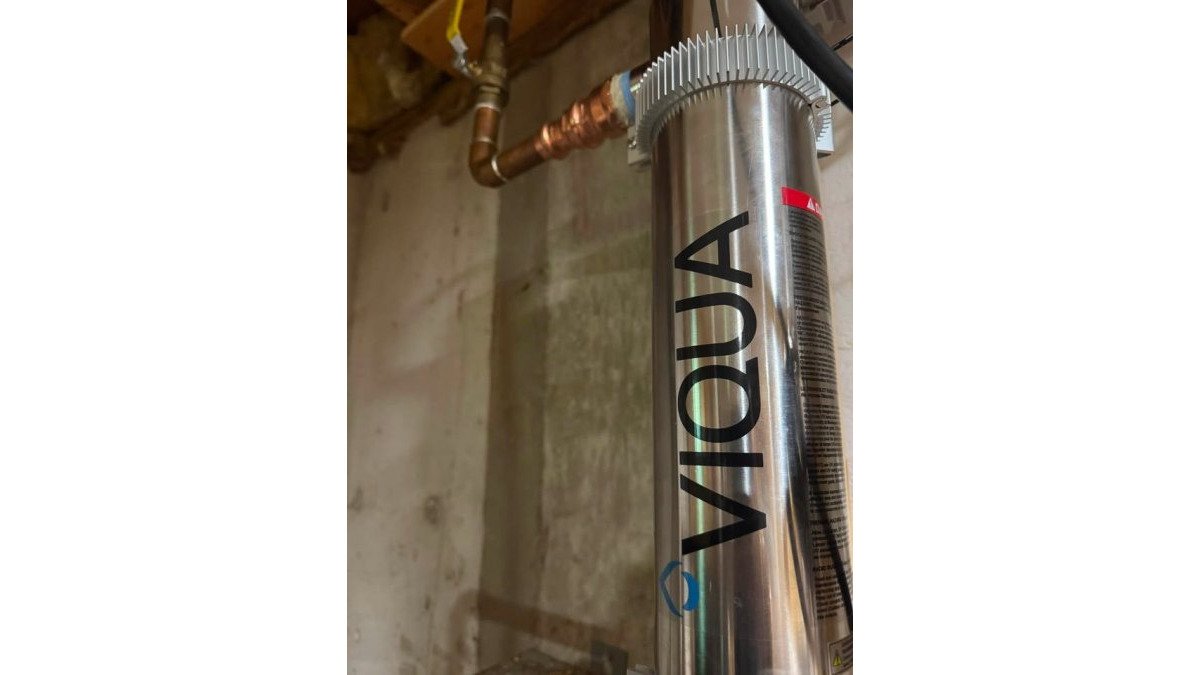
- Bacteria and viruses require UV treatment or chlorination.
- High total dissolved solids may require reverse osmosis.
6. Softening has operating costs and trade-offs.
A softener consumes salt, uses water during regeneration, and needs periodic maintenance.
What softening does do, within those limits:
- Removes calcium and magnesium when the unit is sized and maintained correctly
- Prevents new scale on heating elements, pipes, and fixtures
- Protects appliances fed by treated water
- Improves water flow and soap performance
- Reduces the energy penalty of a scaled water heater
The practical takeaway: softening is the most reliable scale-prevention method available, but it is a system, not a magic box.
Frequently Asked Questions
Does water softening prevent appliance scale from forming?
Water softening reduces scale formation by removing hardness-causing minerals like calcium and magnesium before they deposit on appliances. Ion-exchange softeners replace these minerals with sodium, preventing new scale buildup on dishwashers, washing machines, and water heaters. However, softening does not remove scale that has already accumulated; it stops future deposits. For existing scale, you'll need physical removal or descaling treatments alongside softening.
Can a water softener remove scale that's already built up on my water heater?
No. Water softeners prevent new scale from forming but cannot dissolve or remove deposits already inside your water heater or appliances. Once scale accumulates on heating elements, you need descaling or professional cleaning to restore efficiency. Starting softening treatment now protects your appliances going forward and prevents additional buildup, but existing deposits require separate removal methods.
How do I test my water hardness at home?
You can use an at-home water hardness test kit, available at hardware stores, which typically costs under $20. These kits use test strips or color-change reactions to estimate hardness in parts per million (ppm) or grains per gallon (gpg). For more accurate results, request a professional water analysis from a water treatment specialist who can identify not only hardness but also issues like iron, sulfur odors, or chlorine taste that may affect your specific situation.
What's the difference between water softening and salt-free water conditioning for scale prevention?
Ion-exchange water softeners remove hardness minerals entirely, replacing them with sodium to prevent scale formation. Salt-free conditioning systems use alternative methods (like template-assisted crystallization) to alter mineral structure without removing them, which may reduce but not eliminate scale. Softeners are more effective at preventing scale buildup, while conditioning systems avoid sodium addition and wastewater but offer less complete protection. Your choice depends on your water quality, health concerns, and scale prevention goals.