 how-to
How to Protect Appliances From Scale: 7-Step Guide
Table of Contents
- Why Scale Buildup Threatens Your Appliances (and Your Wallet)
- Signs of Hard Water in Your Home: What to Check First
- How to Test Your Water Hardness at Home
- Step-by-Step: How to Descale a Washing Machine
- DIY Descaling for Dishwashers and Water Heaters
- Salt-Based vs. Salt-Free Water Conditioners: Which Protects Appliances?
- Appliance-Specific Maintenance Schedules to Prevent Scale Damage
- Frequently Asked Questions
Last Updated: October 4, 2026
Why Scale Buildup Threatens Your Appliances (and Your Wallet)
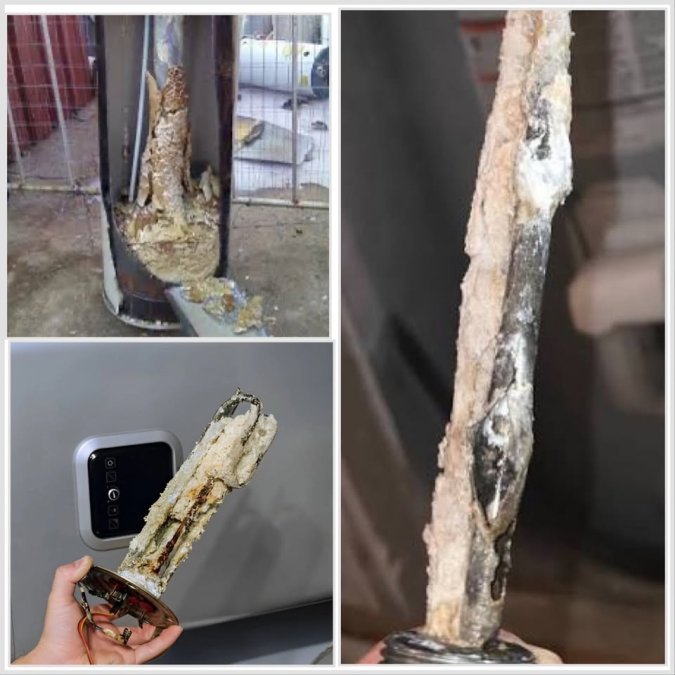
Hard water carries high levels of dissolved calcium and magnesium. When it heats up or sits in your pipes, those minerals settle out as scale, a chalky crust that clings to heating elements, valves, and drums.
Scale builds quietly, layer by layer.
The cost shows up later in three ways:
- Higher energy bills. A coated heating element must run longer to reach the same temperature.
- Shorter appliance life. Mineral accumulation stresses motors, pumps, and seals.
- Bigger repair bills. Scale-related failures often cost more to fix than the maintenance that would have prevented them.
A water heater fighting limescale burns more energy for the same hot shower, a dishwasher leaves film on glasses, and a washing machine stiffens towels.
Signs of Hard Water in Your Home: What to Check First
The clearest signs of hard water show up on fixtures and dishes before they ever show up on a repair invoice. Do a quick walk-through this week.
Visual Clues on Fixtures and Dishes
Start in the bathroom and kitchen, where scale reveals itself first:
- White, chalky crust around faucets and showerheads
- Cloudy spots on glasses fresh out of the dishwasher
- A dull film on tile and glass shower doors
- Stiff, scratchy towels after washing
Appliance Performance Warning Signs
Your appliances tell you too:
- The water heater takes longer to deliver hot water
- The dishwasher leaves grit or film on dishes
- The washing machine uses more detergent for the same results
- Water pressure at fixtures has dropped
If two or more sound familiar, test next. Guessing wastes money; a test takes minutes.
How to Test Your Water Hardness at Home
Testing is the fastest, cheapest way to know how hard your water is. Three options vary in accuracy and price.
Method | What It Tells You | Effort | Best For |
|---|---|---|---|
Test strips | Rough hardness range | 1 minute | Quick check |
Liquid test kit | Precise hardness number | 5 minutes | Well water owners |
Professional analysis | Hardness plus iron, sulfur, chlorine | Scheduled visit | Whole-home planning |
Test strips are the starting point. Dip, wait, and match the color to the chart.
Liquid kits give an actual number in grains per gallon, which matters when choosing a treatment system. For well water, a professional test is worth it because hardness is rarely the only issue, iron, manganese, and sulfur odors often travel together.
Once you know your number, you can act on it. If hardness is high, descaling becomes a routine, not a one-time fix.
Step-by-Step: How to Descale a Washing Machine
Descaling a washing machine takes about an hour with supplies you likely already own.
What You'll Need
- White vinegar (2 to 4 cups)
- Baking soda (optional, for odor)
- A microfiber cloth
- A small brush or old toothbrush
Descaling Steps for Top-Load and Front-Load Washers
- Run an empty hot cycle. Set the machine to the hottest setting with no clothes.
- Add the vinegar. Pour 2 cups into the drum for a top-loader, or into the detergent dispenser for a front-loader.
- Pause mid-cycle. Let the vinegar sit for 30 to 60 minutes so it can break down mineral deposits.
- Finish the cycle. Let it run through the rinse and spin.
- Wipe the seals. Use your cloth and brush on the door gasket and detergent drawer.
- Run a second rinse cycle. This clears any loosened scale and vinegar residue.
Do this monthly in hard water areas; every other month is fine for moderately hard water.
DIY Descaling for Dishwashers and Water Heaters
Dishwashers and water heaters collect scale in different places, so each needs its own routine.
Dishwasher Descaling Routine
- Remove the bottom rack and check the spray arms for clogged holes.
- Place a cup of white vinegar upright on the top rack.
- Run a hot cycle with no detergent.
- Scrub the filter and door gasket with a brush.
- Run a short rinse cycle to finish.
Monthly keeps film off glasses and pressure in your spray arms.
Flushing a Tankless or Tank Water Heater
Tankless units need an annual flush with descaling solution and a pump kit; tank units need sediment drained from the bottom valve every six to twelve months. Both protect the heating elements, which scale attacks hardest.
If the water heater is already scaled, descaling clears what's there but won't undo existing corrosion. Prevention beats repair every time.
Salt-Based vs. Salt-Free Water Conditioners: Which Protects Appliances?
Most homeowners get this wrong, because the two categories are marketed as if they do the same job. They don't. One removes hardness minerals; the other keeps those minerals from sticking to surfaces. That difference determines whether your water heater's element stays clean or slowly coats itself in scale.
How Salt-Based Softeners Work
A salt-based softener runs water through ion-exchange resin beads charged with sodium ions (the EPA).
Request My Free Water Analysis →
The trade-off is a small amount of added sodium, usually under 30 mg per 8-ounce glass at typical hardness levels, though it climbs with very hard water. If someone in the home is on a sodium-restricted diet, a reverse-osmosis drinking-water tap is the standard fix.
How Salt-Free Conditioners Work
Salt-free systems go by several names, conditioner, descaler, template-assisted crystallization (TAC), but the mechanism is the same. Water passes over a media bed that turns dissolved calcium and magnesium into microscopic crystals, which stay suspended instead of depositing on surfaces.
The minerals are still there, and the water is still hard by any lab test. What changes is how they behave on a hot surface.
No salt, no brine discharge, no electricity on most models, and no regeneration cycle. That's the appeal.
Side-by-Side Comparison
Feature | Salt-Based Softener | Salt-Free Conditioner |
|---|---|---|
Removes calcium and magnesium | Yes, via ion exchange | No, alters crystal behavior |
Needs salt refills | Yes, roughly 40-80 lb/month | No |
Needs electricity | Usually yes | Usually no |
Wastewater discharge | Yes, during regeneration | None |
Reduces scale on heating elements | Strongly | Moderately, varies by hardness |
Adds sodium to water | Small amount | No |
Handles iron and manganese | Partially, with the right resin | No |
Best for | Very hard water (7+ gpg), well water | Moderate hardness (3-7 gpg), low-maintenance homes |
How to Choose Using Your Test Number
This is where your water test earns its keep. Match your grains-per-gallon reading to the guidance below:
- Under 3 gpg (soft): Neither system is worth the money. Descaling maintenance is enough.
- 3 to 7 gpg (moderately hard): A salt-free conditioner can reduce scale buildup, or you can stay on a descaling schedule and skip hardware entirely.
- 7 to 10 gpg (hard): Salt-based softening is the more reliable protection for water heaters, dishwashers, and washing machines.
- Above 10 gpg (very hard): Salt-based softening, sized to your household, is the standard recommendation. Expect to descale less often but not never.
If your test also shows iron above 0.3 ppm, manganese, or sulfur odor, salt-free is the wrong tool. Those contaminants need dedicated treatment, and a softener with the correct resin is often part of the solution.
A professional water analysis turns this from a guess into a decision. Testing for hardness, iron, manganese, sulfur, and chlorine before recommending anything is the only way to size a system correctly, and avoid paying for capacity you don't need or a conditioner that can't handle your water.
Appliance-Specific Maintenance Schedules to Prevent Scale Damage
Most articles hand you a frequency table and stop. A real schedule tells you what to do, how long it takes, what supplies it needs, and what happens if you skip it. Here's the version we give homeowners.
The Full Maintenance Schedule
Appliance | Task | Frequency | Time | Supplies |
|---|---|---|---|---|
Washing machine | Vinegar descale cycle + gasket wipe | Monthly | ~60 min | 2-4 cups white vinegar |
Dishwasher | Vinegar cycle + filter and spray-arm scrub | Monthly | ~45 min | 1 cup white vinegar |
Water heater (tank) | Drain sediment from bottom valve | Every 6-12 months | ~30 min | Garden hose |
Water heater (tankless) | Full descale flush with pump kit | Annually | ~90 min | Descaling solution, pump kit, two hoses |
Coffee maker | Vinegar or citric acid cycle | Monthly | ~30 min | 1:1 vinegar to water, or citric acid |
Faucets and showerheads | Soak in vinegar, scrub aerator | Every 2-3 months | ~20 min | White vinegar, small brush |
Ice maker and water dispenser | Run cleaning cycle, replace filter | Every 6 months | ~20 min | Manufacturer filter |
Steam iron | Vinegar and water flush | Every 2-3 months | ~15 min | White vinegar |
Why the Frequencies Differ
The schedule isn't arbitrary. Each interval reflects how fast scale forms in that appliance's environment.
A water heater runs hot water through a tank or heat exchanger daily, and heat drives minerals out of solution.
A washing machine sees hot and cold water plus lots of detergent, which leaves its own residue on top of scale.
A dishwasher runs hot, but its water contacts heating elements less than a water heater's does.
What Happens If You Skip It
Skipping isn't free. It just moves the cost.
- Water heater: Sediment at the bottom insulates the burner or element, so the unit runs longer for the same hot water. Over time, the tank can overheat and fail at the seam.
- Washing machine: Scale stiffens fabrics, forces longer cycles, and stresses the pump and drum bearings.
- Dishwasher: Clogged spray-arm holes reduce water pressure, which leaves film and grit on dishes and forces a second wash.
- Tankless water heater: A scaled heat exchanger can throw an error code and shut down. A flush restores it; a replacement does not come cheap.
Print-and-Post Checklist
Copy this into a phone note or tape it inside the cabinet under the kitchen sink. Check off each task and note the date.
- Test water hardness (annually)
- Washing machine vinegar cycle (monthly)
- Dishwasher vinegar cycle and filter scrub (monthly)
- Coffee maker descale (monthly)
When Maintenance Isn't Enough
If you're descaling on schedule and still seeing white crust on fixtures, film on dishes, or rising energy bills, the water itself is the problem, not your routine. That's when a water test and treatment plan make more sense than another bottle of vinegar. Descaling manages scale that's already forming; treatment reduces how much forms in the first place.
The goal isn't perfect water. It's water that stops costing you appliances.
Frequently Asked Questions
What is the 50/50 rule for appliances?
The 50/50 rule is a maintenance guideline suggesting that once an appliance reaches half its expected lifespan, you should double your efforts to prevent scale and mineral damage. For example, if your water heater has a 10-year lifespan, start flushing it every six months after year five. This simple habit helps protect appliances from scale and extends their working life.
Will a water softener reverse scale from pipes?
No, a water softener will not reverse existing scale from pipes or appliances. It prevents new mineral deposits from forming by removing calcium and magnesium through ion exchange. For existing buildup, you need mechanical descaling or professional cleaning. Combining a softener with regular descaling gives the best protection for appliances and plumbing.
Does a water filter prevent scale buildup?
Most standard water filters do not prevent scale buildup. Carbon filters remove chlorine and odors but leave dissolved minerals untouched. To stop scale, you need a water softener or a salt-free conditioner. Reverse osmosis systems can reduce minerals but are typically installed at a single tap, not for whole-home appliance protection.
How can I tell if hard water is damaging my dishwasher?
Look for white, chalky film on dishes and glassware after a wash cycle. Check the dishwasher interior for crusty deposits around the heating element and spray arms. You may also notice dishes not getting clean or a cloudy appearance on glass. These are signs of hard water in your home and indicate scale is building inside the appliance.