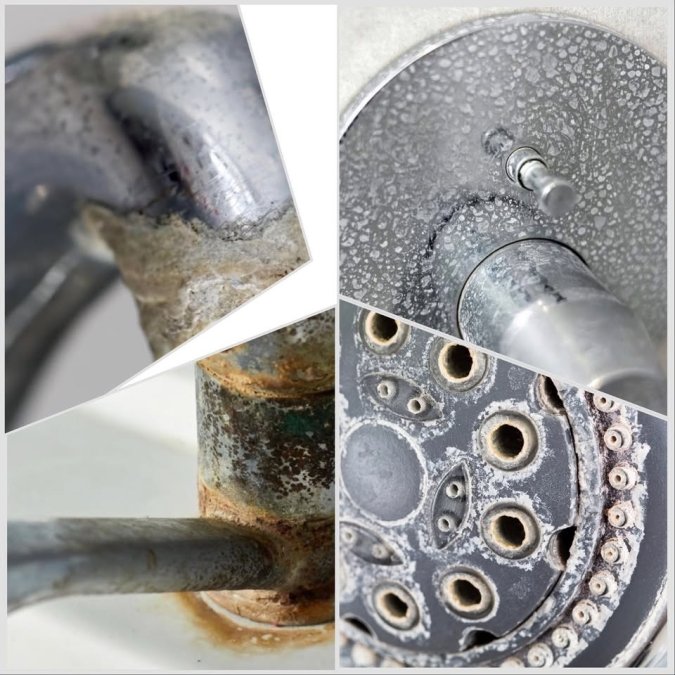
 ultimate-guide
Signs of Hard Water in Home: 8 Warning Signs to Know
Table of Contents
- What Hard Water Does Inside Your Home
- 8 Signs of Hard Water in Home to Watch For
- Hard Water Testing Kits vs. Professional Lab Analysis
- How to Remove Hard Water Stains From Fixtures and Glass
- Benefits of Water Softening Systems for Your Whole Home
- What Softening Won't Fix: Iron, Sulfur, and Chlorine
- Frequently Asked Questions
Last Updated: September 16, 2026
What Hard Water Does Inside Your Home
Hard water carries elevated dissolved calcium and magnesium picked up as it moves through rock and soil. Those minerals are harmless to drink but behave badly around plumbing.
How Hardness Is Measured (gpg and ppm)
Grains per gallon is the traditional unit printed on most test strips; parts per million is the scientific equivalent used in lab reports and municipal disclosures. A reading of 10 gpg is the same as 171 ppm. When comparing a test strip against a city water quality report, convert to the same unit first, or the numbers will look contradictory when they aren't.
8 Signs of Hard Water in Home to Watch For
The clearest signs of hard water in home plumbing show up in four places: fixtures, dishes, skin, and appliances. Any single symptom can have another cause, but three or more together almost always point to mineral content. Work through the list below starting with the cheapest thing to check.
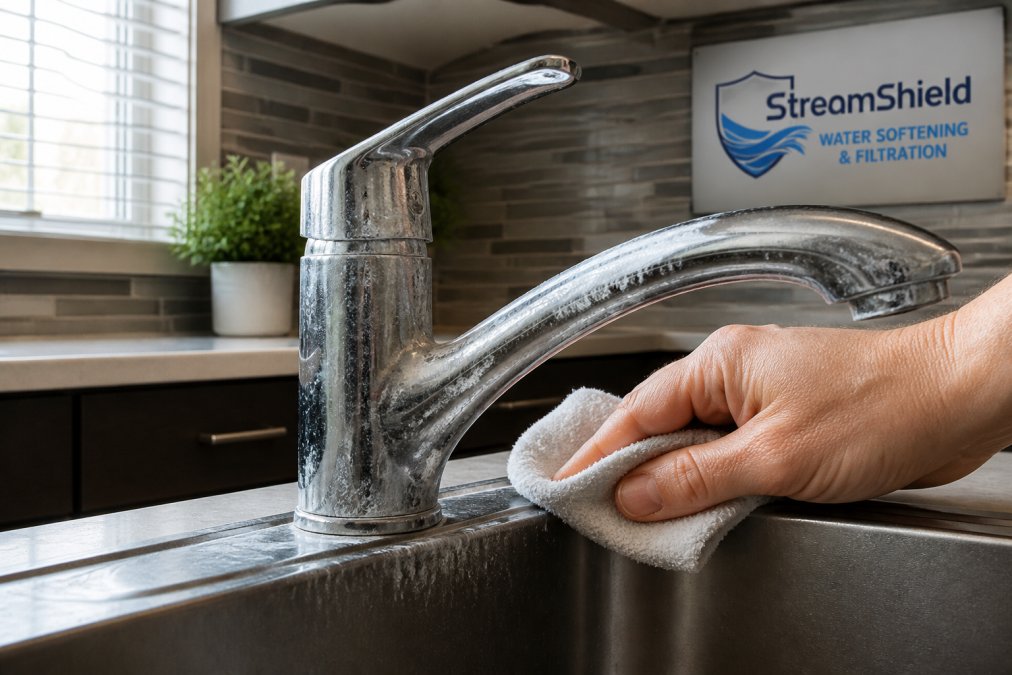
- White, chalky crust on faucets and showerheads. This is limescale, the visible deposit left when calcium carbonate drops out of solution.
- Soap that refuses to lather. Hard water reacts with soap to form an insoluble curd, so you use more product for the same result.
- Soap scum on shower walls and tubs. That gray-white film is the same reaction, baked onto tile and glass.
- Spotty dishes and cloudy glassware. Minerals remain after the rinse water evaporates, leaving spotting and a permanent etching haze over time.
- Dry, tight skin and dull hair. Mineral residue interferes with how cleansers rinse away, and many people notice the difference most in winter.
- Falling water pressure at one fixture. Showerhead buildup narrows the openings, so the spray weakens before the pipes ever do.
- A water heater that rumbles or costs more to run. Sediment collects at the bottom of the tank and insulates the burner from the water.
- Stiff, gray laundry. Detergent effectiveness drops, and fabrics feel rougher after repeated washes.
White Scale and Mineral Buildup on Fixtures
Mineral deposits are the signature symptom and the easiest to confirm. Rub a fixture with a dry finger: if a white powder comes off, that's scale. If the surface feels slick or the deposit is rust-colored, you're looking at something else, most often iron or biofilm. Scale builds fastest where water sits and evaporates, the aerator, showerhead, and dishwasher door get hit first, and left alone, it forms inside your pipes and on heating elements.
Soap Scum, Spotty Dishes, and Dry Skin
Soap scum is not a cleaning failure, it's chemistry. Calcium and magnesium ions bind with soap molecules and create a sticky, water-insoluble film that clings to grout, glass, and skin. You buy more detergent, run longer rinse cycles, and still get cloudy glasses. On skin, the residue disrupts the skin barrier, which is why people with eczema or psoriasis often report flare-ups that track with their water source.
Falling Water Pressure and Rising Energy Bills
Two appliance symptoms cost real money. A showerhead clogged with scale loses pressure gradually, so most people blame the fixture rather than the water. More expensive is water heater sediment: mineral scale settles on the tank bottom and heating element, forcing the unit to run longer to reach the same temperature, higher bills with no change in usage.
Hard Water Testing Kits vs. Professional Lab Analysis
A test strip tells you roughly how hard your water is. A lab analysis tells you what else is in it, and that distinction matters more than most homeowners expect. DIY strips are cheap, fast, and accurate enough to confirm whether hardness is present, but they miss everything co-occurring: iron, manganese, sulfur, chlorine, and pH balance. That gap is why a softener sized from a strip reading can underperform.
Reading Your Results Against the Hardness Scale
The U.S. Geological Survey's water hardness overview classifies water below 3.5 gpg as soft, 3.5-7 gpg as moderately hard, 7-10.5 gpg as hard, and above 10.5 gpg as very hard. Those brackets matter because they map to different treatment decisions:
- Under 3.5 gpg: Softening is optional. You may still see occasional spotting, but scale buildup is slow.
- 3.5-7 gpg: The range where most homeowners first notice soap scum and dull dishes. A basic ion-exchange softener handles this comfortably.
- 7-10.5 gpg: Scale forms fast on heating elements. Water heater flushing becomes a maintenance item, not a suggestion.
- Above 10.5 gpg: Very hard. Appliances lose efficiency measurably, and you'll want a system sized to your household's daily gallon usage, not a big-box unit rated for an average home.
DIY Kits vs. Lab Analysis: The Accuracy Trade-Off
Method | Typical Accuracy | What It Measures | Best For | Main Limitation |
|---|---|---|---|---|
Test strips | ±2-5 gpg | Hardness range only | Quick confirmation | Saturates at high hardness; no iron, sulfur, or pH data |
Drop-count titration kit | ±1 gpg | Hardness, more precisely | Verifying a strip result | Still hardness only; user error affects count |
Professional lab analysis | Lab-grade | Full mineral and chemical panel | Sizing a whole-home system | Requires a sample and turnaround time |
A drop-count kit adds reagent drops to a measured water sample until the color shifts; each drop corresponds to a known hardness increment. It's more precise than a strip but still tells you nothing about iron, the mineral most likely to foul a softener's resin bed. On a private well, a lab panel is the only way to know whether you need iron filtration ahead of the softener.
How to Collect a Sample That Won't Mislead You
Most bad test results come from bad samples, not bad kits:
- Take the sample from a cold-water tap that hasn't run for several hours. Hot water has been through the heater, where minerals may have already dropped out.
- Avoid the kitchen faucet if it has an aerator or a filter cartridge. Both can skew hardness readings and hide what's actually arriving at your water heater.
- For a lab sample, follow the lab's collection instructions exactly, most require a specific volume, container, and sometimes a preservative. A sample collected in a rinsed jelly jar will produce a result you can't trust.
- Test at more than one tap if you have a softener already installed. A reading at the softener's outlet versus a raw-water tap tells you whether the unit is actually working.
When to Skip DIY and Go Straight to a Lab
Three situations justify skipping the strip entirely: you're on a private well, you're sizing a whole-home treatment system, or you've noticed symptoms beyond hardness (rust staining, sulfur odor, chlorine taste). In each case, the lab panel costs less than guessing wrong on a softener. A unit sized for hardness alone, installed on water with elevated iron, will foul its resin within a year or two, a replacement, not a repair.
Request My Free Water Analysis →
How to Remove Hard Water Stains From Fixtures and Glass
Removing hard water stains comes down to dissolving the mineral deposit, not scrubbing it off, acid dissolves calcium carbonate, while abrasion just scratches the finish underneath. For fixtures, soak a cloth in white vinegar, wrap it around the faucet or showerhead, and leave it for an hour before wiping. For glass shower doors, a paste of baking soda and vinegar applied with a non-scratch pad lifts most haze.
A few practical cautions:
- Never mix vinegar with chlorine bleach. The combination releases toxic gas.
- Skip abrasive powders on brushed nickel, chrome, and glass; they leave permanent scratches.
- Don't use acid cleaners on natural stone tile or grout, which etch easily.
- Clean the aerator by unscrewing it and soaking it separately; it traps most of the scale.
Benefits of Water Softening Systems for Your Whole Home
The benefits of water softening systems show up across the whole house, not just at the tap. A softener removes hardness minerals through ion exchange, swapping calcium and magnesium for sodium or potassium ions in a resin bed. The result is water that lathers properly, rinses clean, and stops depositing scale. Appliances that heat water last longer and run closer to rated efficiency, dishes come out spot-free without a rinse aid, laundry needs less detergent, and skin and hair feel different within the first week.
What Softening Won't Fix: Iron, Sulfur, and Chlorine
A softener is a hardness solution, not a whole-water solution. Iron and manganese foul softener resin over time and need dedicated oxidation and filtration ahead of the softener. Sulfur, the source of that rotten-egg smell in well water, requires aeration or chemical oxidation. Chlorine and chemical odors in treated municipal water are handled by carbon filtration. Skipping these stages is the most common mistake we see: homeowners buy a softener, the hardness disappears, and the staining and smell remain.
The Long-Term Cost of Owning a Softener
Most buyers compare sticker prices and stop there. The real cost of ownership breaks into four buckets:
- Salt or potassium chloride: An ion-exchange softener regenerates on a schedule, and each regeneration consumes salt. A family of four on 10-gpg water typically goes through several bags of salt per month. Potassium chloride costs noticeably more than sodium chloride and is the choice for households watching sodium intake.
- Resin life: Softener resin is not permanent. It degrades over years of use, and iron fouling accelerates that. Resin replacement is a mid-life expense most owners don't budget for.
- Service and parts: Control valves, brine tanks, and seals wear out. Annual professional service can help prevent emergency repair, but it's still a recurring line item.
- Water and sewer: Every regeneration cycle sends water to the drain. On municipal sewer, that water is billed twice, once going in, once going out.
Matching the System to the Problem
A treatment train, the sequence of stages water passes through, should be built in the right order:
- Sediment filtration first, to protect downstream media from grit.
- Iron and manganese oxidation/filtration if those minerals are present, because they foul softener resin.
- Carbon filtration for chlorine, taste, and odor on municipal supplies.
- Softening last, so the resin only has to handle hardness.
- Point-of-use polishing (reverse osmosis at the kitchen tap) if you want the best drinking water.
Questions to Ask Before You Buy
- What is my measured hardness in gpg, and what grain capacity does that require for my household size?
- What else is in my water, and does the proposed system address it in the right order?
- What does annual maintenance actually cost, including salt, service, and any media replacement?
- What is the expected lifespan of the resin, the control valve, and the unit itself?
- If I move to a salt-free system, what will I give up compared to ion exchange?
For anyone comparing a pitcher filter to a whole-home system, the difference is scope. A pitcher treats a few cups at a time at one tap; a whole-home system treats every gallon entering the house, which is why it changes your shower, your laundry, and your water heater instead of just your drinking glass. But scope also means cost, and the households happiest with their systems understood the full cost of ownership before the install, not after.
Frequently Asked Questions
How can I test if my house has hard water?
Start with a hard water testing kit, which measures calcium and magnesium in grains per gallon (gpg) or parts per million (ppm). A reading above 7 gpg is considered hard. Kits are quick and cheap but only show a snapshot. For a full picture, including iron and manganese, a professional lab analysis or a free in-home water analysis gives you a treatment plan instead of just a number.
What are the most common signs of hard water on faucets and fixtures?
White scale and chalky residue on faucets, showerheads, and glassware top the list. You may also see soap scum that resists scrubbing, water spots that dry cloudy, and reduced flow from showerhead buildup. These mineral deposits form when calcium and magnesium in hard water react with soap and heat, leaving limescale behind on plumbing fixtures throughout the house.
Does hard water affect my skin and hair?
Yes. Hard water makes soap lather poorly, so residue stays on skin after rinsing. That residue can leave skin feeling tight or itchy and hair looking dull. People with eczema or psoriasis often notice more irritation because the minerals disrupt the skin barrier. Softening the water helps soap rinse clean, which many homeowners report makes skin feel less dry.
Can hard water damage my plumbing and appliances?
Over time, yes. Mineral buildup narrows pipes, coats water heater elements, and leaves sediment in the tank, which forces appliances to work harder and shortens their lifespan. Dishwashers and washing machines see the same scale on internal parts. A water softener using ion exchange removes the calcium and magnesium before they reach your plumbing, protecting appliance efficiency and cutting long-term repair costs.