 how-to
Does Well Water Need Filtration? A Testing-First Guide
Table of Contents
- Does Well Water Need Filtration? Start With Testing
- Common Well Water Contaminants and Health Risks
- How to Test Well Water Before Choosing a Filter
- Selecting a Well Water Filter for Bacteria and Microorganisms
- Iron Removal: When You Need a Well Water Iron Filter
- Understanding Well Water Treatment System Cost and ROI
- Maintenance, Monitoring, and When Filtration Fails
- Conclusion: Making Your Well Water Safe and Clean
- Frequently Asked Questions
Last Updated: October 9, 2026
Does Well Water Need Filtration? Start With Testing
The answer depends on what's in your water, and whether well water filtration is necessary. Some wells produce clean, safe drinking water for decades; others require immediate action.
Unlike municipal systems that test continuously and report publicly, well water is your responsibility. You can't assume it's safe without testing.
Most homeowners discover problems only after noticing a sulfur smell, rust stains, or scale buildup, by which point damage has already started.
Why Testing Comes Before Treatment
Testing reveals what actually needs filtering, so you know exactly what well water filtration system to install. Without results, you're guessing: a water softener won't remove bacteria, a sediment filter won't eliminate dissolved minerals, and a UV system won't fix iron staining.
Common Well Water Contaminants and Health Risks
Well water can contain dozens of contaminants, since soil, sand, and rock don't filter everything.
Bacterial contamination poses immediate health risks. E. coli and coliform enter groundwater through surface cracks, poor well construction, or flooding.
Iron and manganese are common in groundwater.
Hydrogen sulfide produces a rotten egg smell.
Arsenic and heavy metals accumulate in the body over time.
Nitrates often come from agricultural activity or septic systems. High levels pose particular risk to infants and pregnant women (the EPA).
Hard water minerals like calcium and magnesium don't create health risks, but they cause scale, reduced appliance lifespan, and dry skin.
How to Test Well Water Before Choosing a Filter
Testing is the only way to know whether your well needs treatment, and which treatment. Different contaminants require different tests and sampling methods, so use this framework to buy only what your results justify.
What to Test, and How Often
Test annually for the basics and re-test whenever something changes: a new odor, new staining, a flooded well, a neighbor's new septic system, or nearby construction.
- Every year: total coliform and E. coli bacteria, nitrate, pH, total dissolved solids (TDS), and hardness.
- Every few years, or once at baseline: arsenic, lead, manganese, iron, sulfate, and chloride. Arsenic and lead are odorless and colorless, so testing is the only detection method.
- If you notice a rotten-egg smell: test for hydrogen sulfide and sulfate.
Test more often if your well is shallow, your area has known groundwater issues, or your household includes infants, pregnant members, or anyone immunocompromised.
How to Collect a Reliable Sample
Bad sampling produces bad results and the wrong system. Follow the lab's instructions exactly; in general:
- Use only the sterile bottle the lab provides. Do not rinse it or reuse a household container.
- For a bacteria sample, remove any aerator or screen from the faucet and disinfect the spout (many labs provide an alcohol wipe).
- Run cold water for 2-3 minutes to clear the line, then reduce to a slow, steady stream.
- Fill to the fill line, leave the air gap the lab specifies, and cap immediately. Do not touch the inside of the cap or bottle.
- Keep the sample cool and deliver it to the lab within the timeframe the lab requires, often within 24-30 hours for bacteria.
State-certified drinking water laboratories and sampling instructions
Reading Results: A Testing-First Decision Tree
Once you have results, the next step is not "buy a filter", it's matching the finding to the right category of treatment.
- All results within recommended limits, no aesthetic complaints: No treatment is required. Re-test annually. Filtration here is optional, not necessary.
- Bacteria present (total coliform or E. coli): This is a disinfection problem, not a filtration problem. Boil water or use bottled water until resolved, then disinfect the well and retest. A UV system or chlorination is the typical long-term fix, a carbon or sediment filter will not solve it.
- Nitrate above the limit: Do not rely on boiling (it concentrates nitrate). Use reverse osmosis or ion exchange at the point of use, and address the source (septic, fertilizer, animal waste).
- Arsenic or other heavy metals detected: Point-of-use reverse osmosis or a certified adsorptive media are common choices. Confirm the system is certified for that specific contaminant.
Keep a Water Quality Record
Save every lab report. A year-one baseline lets you spot trends, a slowly rising nitrate level, for example, before they become a health concern, documents water quality if you sell, and tells any treatment professional what they're working with.
Selecting a Well Water Filter for Bacteria and Microorganisms
If testing confirms bacteria, the fix is disinfection, not a generic filter. Many homeowners waste money on a carbon or sediment filter expecting safe water. Treatment technologies aren't interchangeable; each removes a specific set of contaminants and ignores the rest.
Match the Technology to the Contaminant
Use this as a starting point, then confirm the product is certified for the contaminant your test found.
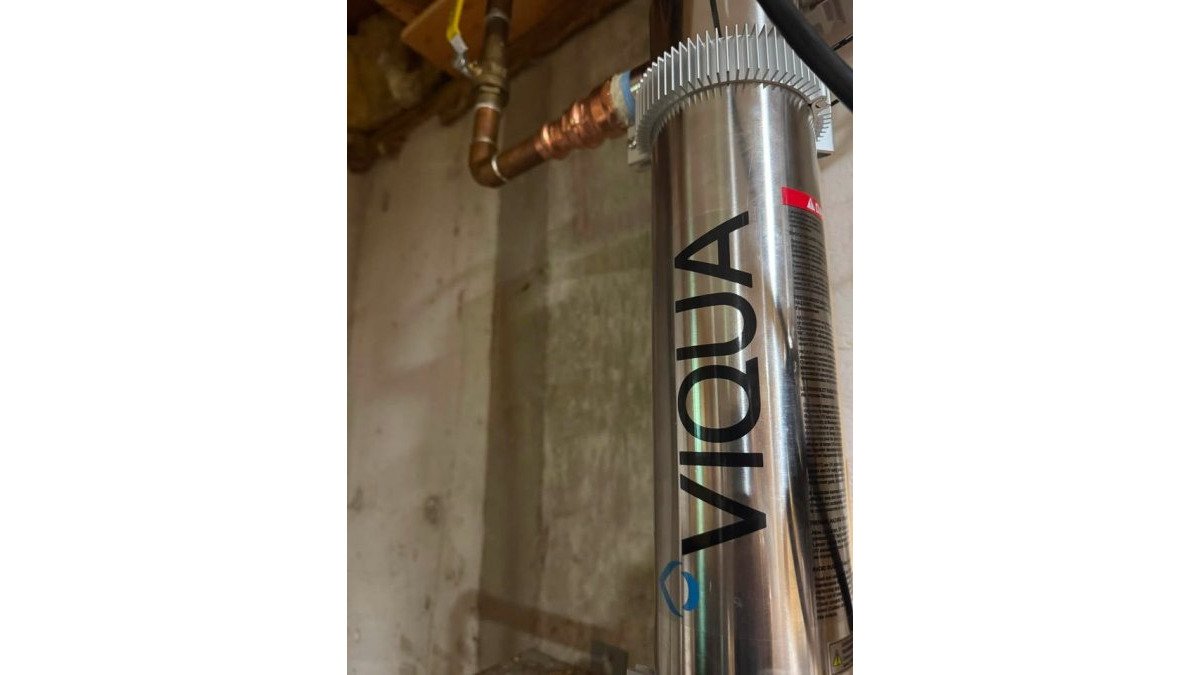
- UV disinfection: Kills bacteria, viruses, and some protozoa. It does not remove them, does not remove chemicals, and does not fix iron, hardness, or nitrate. UV needs clear water, sediment, iron, or tannins can shield microorganisms from the light and let them pass through. A sediment pre-filter is usually required ahead of the UV lamp.
- Chlorination (shock or continuous): Effective against bacteria and some viruses, and it leaves a residual that keeps working in the plumbing. It adds chlorine taste and odor, and can form disinfection byproducts, so carbon filtration after chlorination is common.
- Microfiltration / ultrafiltration: Physically traps bacteria and some viruses using membrane pores smaller than the organisms. Does not remove dissolved contaminants like nitrate or arsenic.
- Ion exchange / water softener: Removes hardness minerals and some dissolved iron. Does not remove bacteria, nitrate, or arsenic.
Why a Two-Stage Approach Often Wins
Most real-world well problems aren't single-contaminant, a common pattern is bacteria plus iron plus hardness, and no single device handles all three. A practical stack:
- Sediment pre-filter, removes particles so downstream stages can work.
- Iron/sulfur media or softener, handles minerals and odor.
- UV or chlorination, disinfects.
- Carbon or RO at the tap, polishes taste and removes specific dissolved contaminants.
Order matters. Putting UV after iron removal, for example, keeps the lamp effective. Putting carbon before disinfection can feed bacteria if the filter is not maintained.
Point-of-Use vs. Whole-House
- Point-of-use (POU): Treats one tap, usually the kitchen sink. Lower cost, lower maintenance, and often the right choice for drinking-water contaminants like nitrate or arsenic. It does not protect plumbing or appliances.
- Whole-house (POE): Treats all water entering the home. Better for iron, hardness, and bacteria because it protects fixtures, appliances, and every tap. Higher upfront and maintenance cost.
A common and cost-effective combination is a whole-house system for the plumbing-wide problems (iron, hardness, bacteria) plus a point-of-use RO for drinking water.
Certification Matters
Look for systems certified by an independent body for the specific contaminant you're treating. A filter marketed as "removes contaminants" without certification for your finding may not remove it at all. Match certification to the test result, not the label.
Request My Free Water Analysis →
Water Treatment Systems designs custom systems based on your test results and household needs. We identify exactly which contaminants need removal, then recommend the most effective approach for your situation.
Iron Removal: When You Need a Well Water Iron Filter
Iron appears in two forms: ferrous (dissolved) and ferric (suspended), each requiring different treatment.
Ferric iron is already oxidized. It appears as cloudiness or sediment in water. Sediment filters remove it directly.
Iron filters combine oxidation and filtration: water passes through media that oxidizes dissolved iron, then filters out the particles.
Water softeners can remove some iron, but they're designed primarily for hardness.
Understanding Well Water Treatment System Cost and ROI
Filtration systems require an upfront investment. The cost depends on what you're treating and how comprehensively.
Point-of-use filters cost less initially but only protect one tap, with replacement filters adding ongoing expense.
Long-term savings often justify the investment.
Consider what problems cost you if left untreated:
- Appliance replacement: water heaters, dishwashers, washing machines
- Plumbing repairs from scale or corrosion
- Health issues from contaminated water
- Laundry damage from iron staining
The right system typically pays for itself through extended appliance life and avoided repairs.
Water Treatment Systems provides free water analysis to identify your specific needs.
Maintenance, Monitoring, and When Filtration Fails
A filtration system requires ongoing care. Neglected systems stop working effectively and can become health hazards.
Filter replacement schedules vary by system type and water quality. UV lamps need annual replacement (the CDC).
Monitor water quality regularly. Watch for changes in taste, odor, or appearance.
Signs of system failure:
- Water returns to original smell or taste
- Pressure drops noticeably
- Visible particles or cloudiness in water
- Staining returns to fixtures
Maintenance prevents failure. Regular filter changes, membrane cleaning, and system inspections keep everything working.
Keep records. Document when you replace filters, service the system, and test water.
Water Treatment Systems provides ongoing support for systems we install.
Conclusion: Making Your Well Water Safe and Clean
Well water doesn't automatically need filtration. But it does need testing. That's the only way to know what you're actually dealing with.
Start with a water analysis. Identify what contaminants are present. Then choose treatment that addresses your specific problems. Guessing wastes money on systems you don't need and leaves real problems untreated.
Frequently Asked Questions
How do I know if my well water needs a filter?
The only way to know for certain is to test your well water. Common signs include rotten egg odors (hydrogen sulfide), reddish or brown staining (iron), cloudiness (sediment), or unusual taste. However, dangerous contaminants like bacteria, nitrates, and arsenic are invisible and odorless. Professional testing identifies all contaminants present so you can choose the right filtration system, or confirm your water is safe without treatment.
What should I test well water for before choosing a filter?
Start with a basic test covering bacteria, nitrates, pH, and hardness. If initial results show issues, add tests for specific contaminants like arsenic, iron, manganese, hydrogen sulfide, and dissolved solids. The EPA recommends testing at least annually, and after flooding, plumbing repairs, or if you notice changes in water quality. Your test results guide which filtration system you actually need.
Can well water be safe to drink without filtration?
Some private wells produce water safe enough to drink untreated, but you cannot assume this without testing. Natural filtration through soil and sand removes some contaminants but does not guarantee safety, bacteria, heavy metals, and chemicals can still reach groundwater. Even if your water tastes and smells fine, harmful microorganisms or dissolved contaminants may be present. Testing is the only way to confirm whether filtration is necessary.
What is the most common problem with well water?
Hard water, high levels of dissolved minerals like calcium and magnesium, is the most widespread issue, causing scale buildup on fixtures and appliances. Iron and manganese staining, sulfur odors, and sediment are also common. Bacterial contamination, nitrates, and arsenic are less frequent but more serious health concerns. Your water test results determine which problems affect your well and what type of treatment system is needed.
If your well water shows contamination, the right filtration system protects your family and your home. Water Treatment Systems conducts professional water analyses that identify exactly what needs treatment. We design custom systems that remove the specific contaminants in your water, protect your appliances and plumbing from damage, and deliver clean, safe drinking water throughout your home. Request your free water analysis today and discover what's actually in your well water.