 how-to
7 Ways Soft Water May Help Dry Skin Right Now
Last Updated: October 30, 2026
Quick Summary
Soft water may help dry skin in some people, mainly when hard water leaves soap scum and a tight, itchy feeling after showering. It is not a cure for dry skin or eczema. Early evidence from bathing studies suggests soft water may improve skin water content, but it is not a standalone fix.
- Hard water minerals, calcium and magnesium, can react with soap and skin oils, leaving a film.
- Give any change at least two to three weeks before judging whether it is working.
- Track tightness after drying off, soap scum, cleanser use, and itching within a few hours.
- Softening is least likely to help with eczema, cleansers, hot water, or low humidity.
Table of Contents
- Why Hard Water Can Leave Your Skin Dry and Itchy
- Can Soft Water Actually Improve Dry Skin?
- Does a Water Softener Help Eczema and Sensitive Skin?
- Dry, Itchy Skin After Shower: What to Check First
- How to Test Water Hardness at Home in 4 Steps
- Softening Versus Filtration: Which Fix Fits Your Skin Goals
- Book Your Free Water Analysis to Find Your Next Step
- Frequently Asked Questions
Why Hard Water Can Leave Your Skin Dry and Itchy
Hard water is water that carries high levels of dissolved minerals, mostly calcium and magnesium. Many Missouri homeowners notice that their skin feels tight and itchy after a shower, even when they use a good moisturizer.
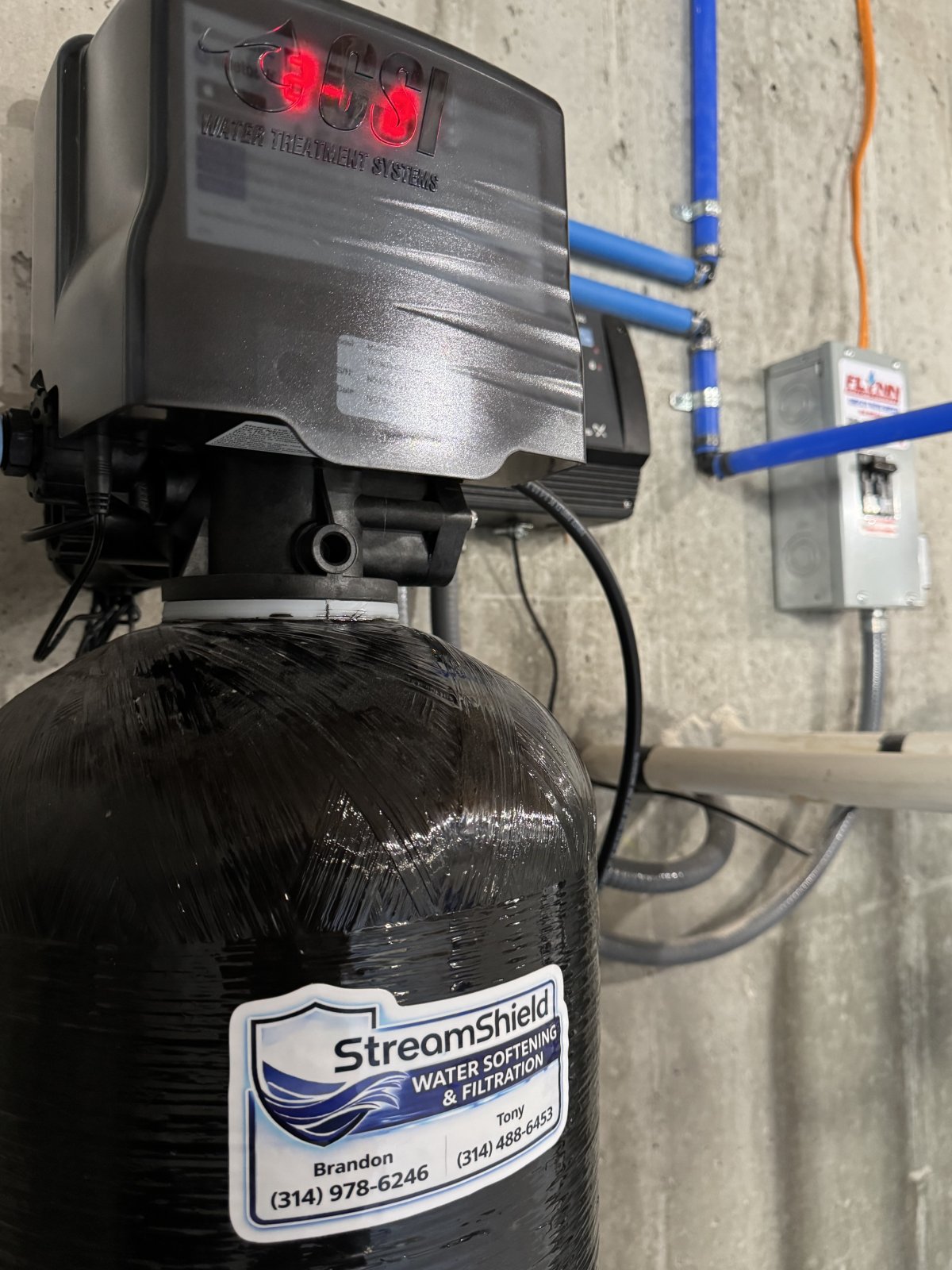
Here is the short answer. Hard water does not cause skin disease, but it may make dryness worse for some people. The minerals can stick to skin and react with soap, leaving behind a film that is hard to rinse off.
How hard water differs from soft water
Soft water has very few of these minerals. Hard water has a lot of them. Your water supplier or a home test kit can tell you which one you have.
- Hard water: Leaves spots, scale, and soap scum behind
- Soft water: Lathers more easily with less soap
- Both: Are safe to drink and bathe in
A review published in Clinical, Cosmetic and Investigational Dermatology suggests that bathing in soft water may improve skin water content and reduce damage linked to mineral reactions with skin lipids review on soft water bathing and skin water content. The review does not give a sample size, so treat it as early evidence.
How calcium and magnesium interact with skin oils
Calcium and magnesium react with the fatty acids in soap and in your skin's natural oils. This reaction forms a sticky residue. The residue can make it harder for your skin to hold on to moisture.
Here is what that often looks like in daily life:
- Soap that does not rinse off cleanly
- A tight, squeaky feeling after drying off
- Itching that shows up a few hours after bathing
Can Soft Water Actually Improve Dry Skin?
Soft water is not a cure for dry skin. Whether it helps depends on how hard your water is and how your skin reacts. You can compare your options in a complete guide to getting soft water at home.
What the evidence actually shows
The strongest support comes from studies of bathing in softened water rather than from drinking-water research. A review published in Clinical, Cosmetic and Investigational Dermatology examined bathing in soft water and reported improvements in skin water content and reduced damage linked to mineral reactions with skin lipids review on soft water bathing and skin water content. That review is a useful signal, but it is not a large randomized trial, so treat it as early evidence rather than proof.
A separate study on dietary water intake found that higher daily water consumption may positively affect normal skin hydration, especially in people who drink less water to begin with Palma et al. study on dietary water and skin hydration. That study looked at drinking water, not water hardness. It does not show that softened shower water will fix dry skin, and it should not be cited as if it does.
The mechanisms that make soft water plausible
There are three concrete reasons soft water could improve dry skin, and each one is testable in your own bathroom:
- Less soap residue. Calcium and magnesium react with the fatty acids in soap to form insoluble salts, the same chemistry behind soap scum on a shower door. That residue can stay on skin after rinsing. Soft water has far fewer of these minerals, so soap lathers with less product and rinses more completely.
- Less disruption of the skin barrier. The skin's outer layer depends on lipids, including fatty acids, to hold moisture in. Mineral-lipid reactions at the skin surface may interfere with that barrier. Reducing the minerals reduces the interference.
- Less need for harsh cleansing. When soap lathers poorly, people often use more of it or scrub harder to feel clean. Soft water can reduce that tendency, which indirectly protects the barrier.
What soft water will not do
Soft water will not treat a skin disease or replace a prescribed regimen. If your dryness persists after you soften your water and adjust your bathing routine, the cause is likely something other than hardness.
How to judge whether it is working for you
Give any change at least two to three weeks before you judge it, because skin barrier recovery is not immediate. A practical way to evaluate soft water is to track four things before and after: how tight your skin feels right after drying off, whether soap scum builds up on the shower door, how much cleanser you need to get a lather, and whether itching appears within a few hours of bathing. If two or more of those improve, soft water is likely helping. If none change, hardness probably was not your main driver.
Does a Water Softener Help Eczema and Sensitive Skin?
A water softener may ease irritation for some people with sensitive skin. It is not an eczema treatment, and it should not replace advice from a dermatologist.
Watch out: If you have an active rash, open skin, or a condition that keeps flaring, see a doctor before you change how you bathe. Water changes will not fix an infection.
Request My Free Water Analysis →
Dry, Itchy Skin After Shower: What to Check First
Start with simple checks before you buy any equipment. Many people find the cause is a mix of water, soap, and temperature. For practical steps you can take at home, read how to fix dry skin from hard water at home.
- Check how hot your shower runs. Very hot water strips oils.
- Switch to a mild, fragrance-free cleanser.
- Pat skin dry instead of rubbing it.
- Apply moisturizer within three minutes of drying off.
- Test your water hardness to see if minerals are the issue.
A simple routine can make a difference right away. Keep the shower short, keep the water warm rather than hot, and moisturize while your skin is still slightly damp.
How to Test Water Hardness at Home in 4 Steps
You can get a rough idea of your water hardness with a home test kit. These kits are widely available at hardware stores and online.
- Buy a test strip or kit. Choose one that measures total hardness in grains per gallon or parts per million.
- Collect a sample. Run cold tap water for a minute, then fill the test container as directed.
- Dip and wait. Follow the timing on the package. Strips usually change color within a minute.
- Compare the result. Match the color to the chart. Higher numbers mean harder water.
A water quality professional can give you a more detailed analysis. Water Treatment Systems offers a free water analysis.
Softening Versus Filtration: Which Fix Fits Your Skin Goals
Softening and filtration solve different problems, and confusing them is one of the most common reasons people buy the wrong equipment. Conventional ion-exchange softeners reduce hardness minerals, calcium and magnesium. For skin goals, that distinction matters.
What each system actually removes
- Ion-exchange softening: Removes calcium and magnesium by swapping them for sodium or potassium ions.
Trade-offs to weigh before you buy
Cost expectations. Installed whole-home softeners typically run from roughly several hundred to a few thousand dollars depending on capacity, installation complexity, and whether filtration is bundled, with ongoing salt and service costs. Showerhead and point-of-use filters are far less expensive but treat only the water that passes through them. Because quotes vary widely by home, get a current written estimate rather than relying on list prices.
A simple decision path
- Test first. Confirm hardness in grains per gallon or milligrams per liter, and check chlorine if you are on municipal water.
- Respect your constraints. If you rent or cannot install whole-home equipment, start with a showerhead filter and bathing-habit changes, and revisit softening when you can.
Pricing depends on your system size, your water test results, and installation needs. Contact Water Treatment Systems for a current quote.
The two main approaches solve different problems, so it helps to compare them side by side before choosing.
Option | Best for | Key difference |
|---|---|---|
Ion-exchange softening | Removing calcium and magnesium | Swaps them for sodium or potassium ions |
Whole-home softener | Hard water throughout the house | Installed cost runs from several hundred to a few thousand dollars |
Showerhead or point-of-use filter | Renters or limited budgets | Treats only the water that passes through it |
Test first | Confirming hardness before buying | Check grains per gallon or mg per liter |
Book Your Free Water Analysis to Find Your Next Step
If you suspect hard water is affecting your skin, the next step is to test it. You can see what happens during a free water analysis before you commit to anything. A free water analysis from Water Treatment Systems can help identify issues with your water, such as hardness, iron staining, or sulfur odor.
Request My Free Water Analysis from Water Treatment Systems.
Frequently Asked Questions
Is soft or hard water better for skin?
Hard water contains calcium and magnesium ions that can react with soap and skin lipids, sometimes leaving a film that makes dryness and itchiness more noticeable. Research on this is limited. Soft water does not replace a consistent moisturizing routine, and anyone with persistent or severe skin symptoms should see a dermatologist.
Can hard water cause dry, itchy skin?
Hard water can contribute to dryness and itching for some people, mainly because mineral deposits can interfere with rinsing and leave soap residue on the skin. However, hard water is rarely the only cause. Weather, hot showers, harsh soaps, and underlying conditions like eczema also play major roles, so it helps to change one variable at a time and track results.
Does softened water help with eczema?
There is no reliable evidence that a water softener treats eczema. Eczema is a chronic condition that needs medical management, including gentle cleansers, regular moisturizing, and sometimes prescription treatment. If you are considering a softener, treat it as one possible comfort measure alongside your dermatologist's plan, not a replacement for it.
How can I tell if hard water is affecting my skin?
Signs that hard water may be contributing include skin that feels tight or sticky after showering even when you rinse well, soap that lathers poorly, a white film on fixtures, and dry hair with dullness. You can confirm hardness with a home test kit, which is widely available. Pricing for any water treatment depends on your home and water conditions, so request a quote from Water Treatment Systems for current options.